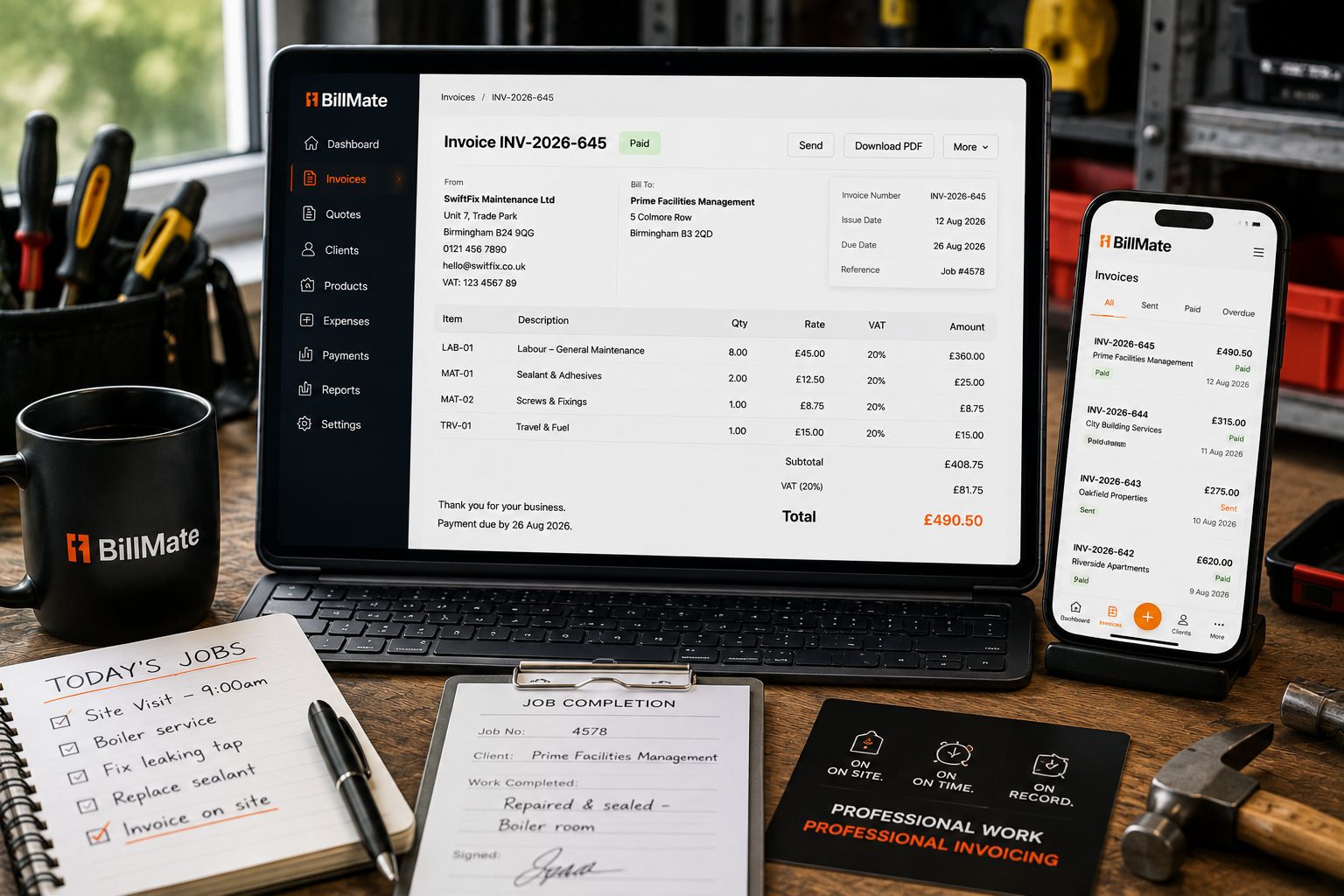
A handwritten receipt is only as reliable as the customer who keeps it — and most do not. This six-person Manchester maintenance team swapped paper pads and texts for on-site digital invoicing that lands in the customer's inbox before the van leaves the street, and watched average payment time fall from 21 days to 9 in a single quarter.
The Challenge
Before BillMate, the team ran their billing on paper invoice pads and text messages. An engineer would finish a job, scribble out a receipt, and hope the customer held onto it. Many did not. Copies went missing, amounts were queried weeks later, and the office had no reliable picture of what had actually been billed on any given day.
The knock-on effect was slow payment. With no consistent record reaching the customer's inbox, invoices sat unpaid for an average of 21 days, and chasing them meant ringing round from memory. There was no list of who owed what — just a general sense that money was out there somewhere.
Quarter-end was worse. Reconstructing tax figures from a shoebox of carbon copies cost the office manager the best part of a weekend, every quarter, on work that existed only because nothing had been captured cleanly the first time.
The Switch To BillMate
The team adopted the BillMate iOS app for engineers on-site and the Web App for the office. There was no long migration: the client list came across in one CSV import, and engineers started raising invoices from the app on the same day.
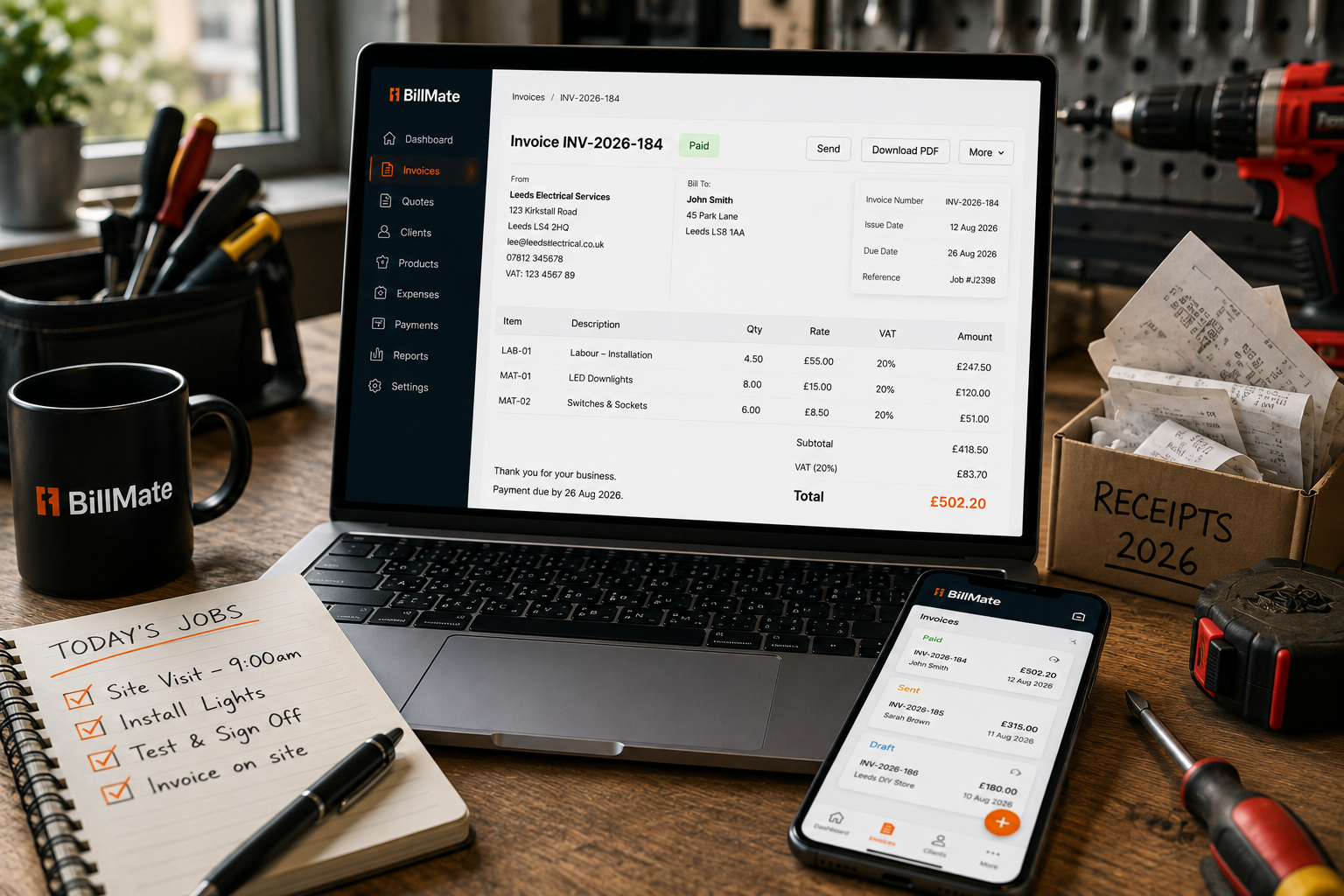
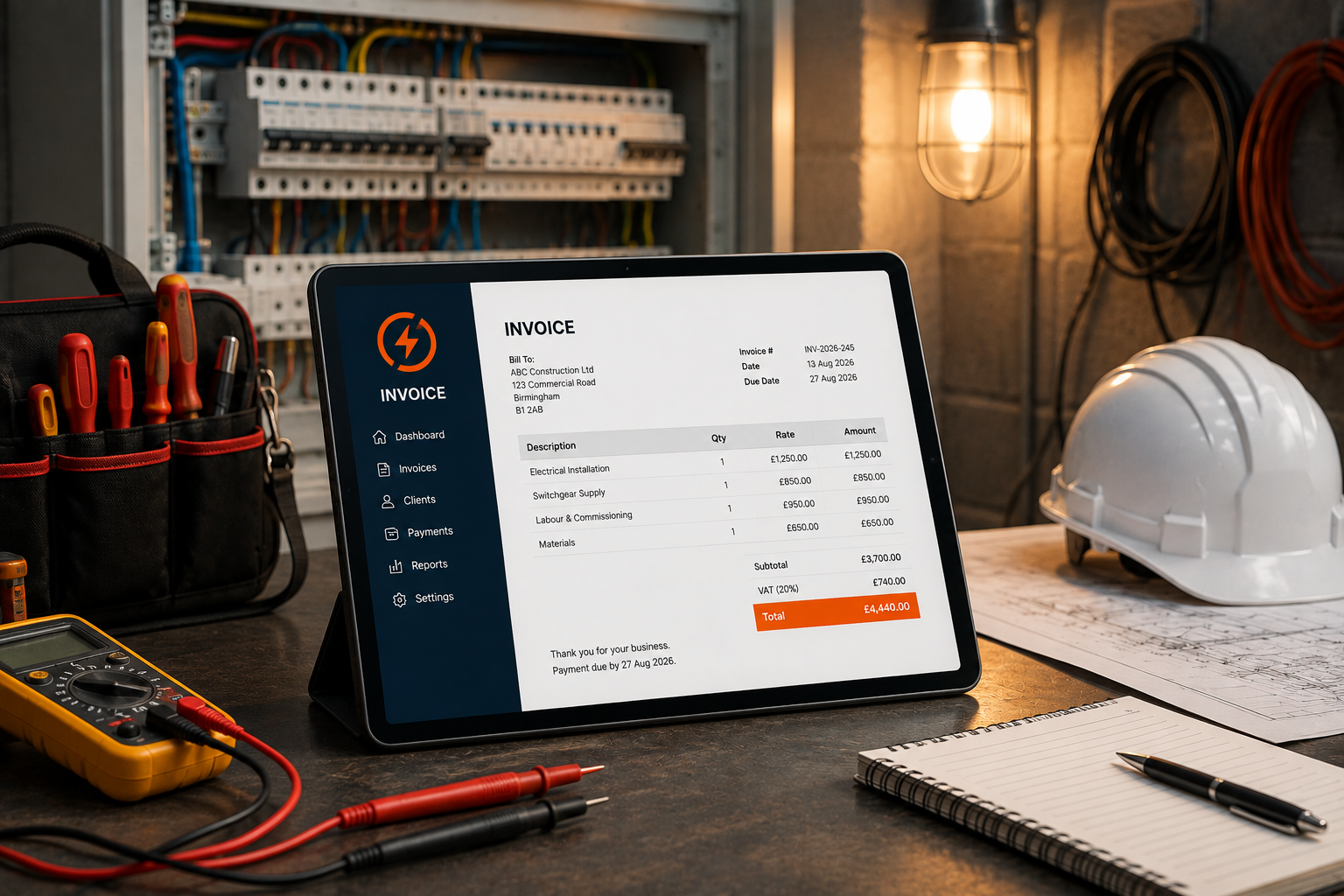
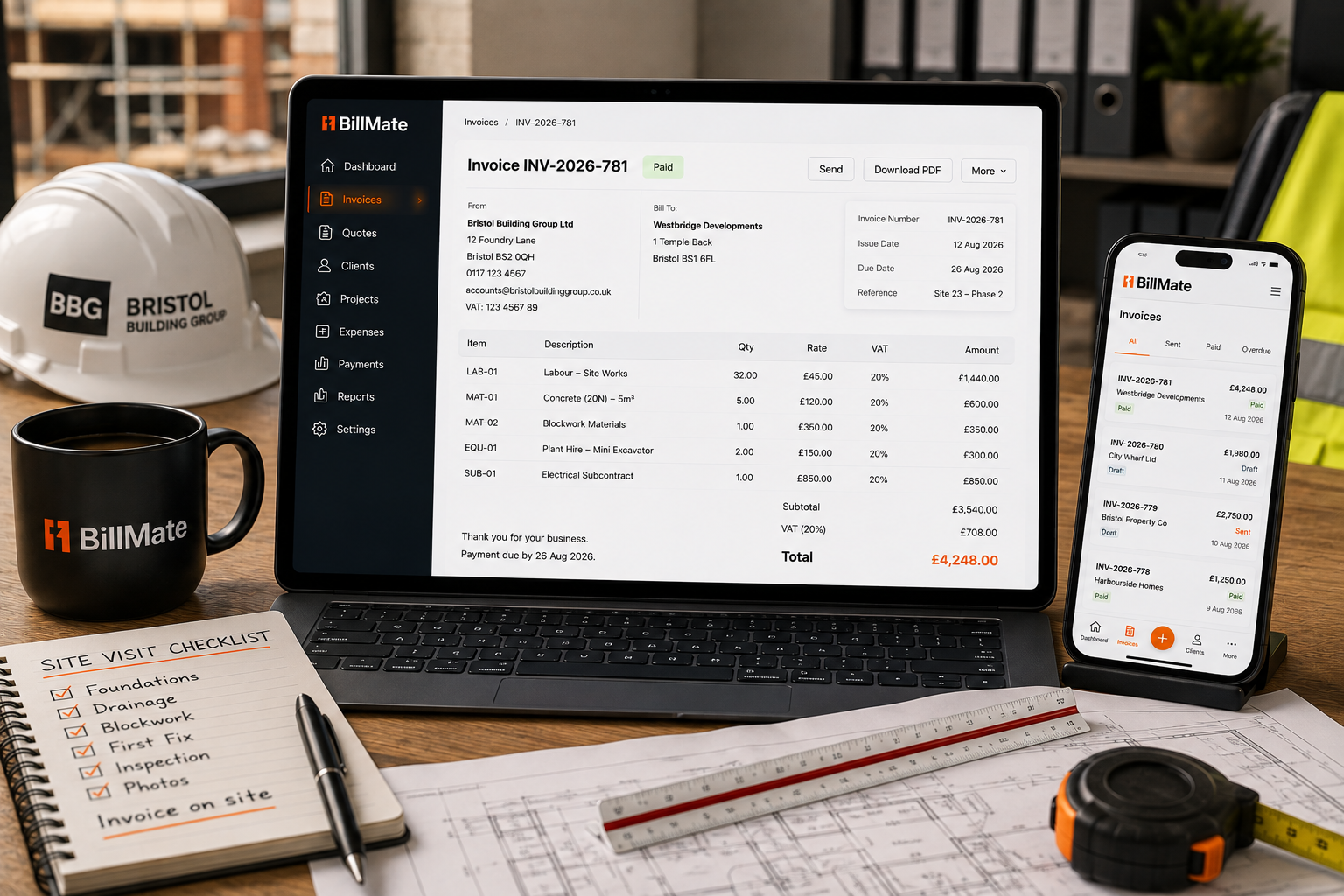
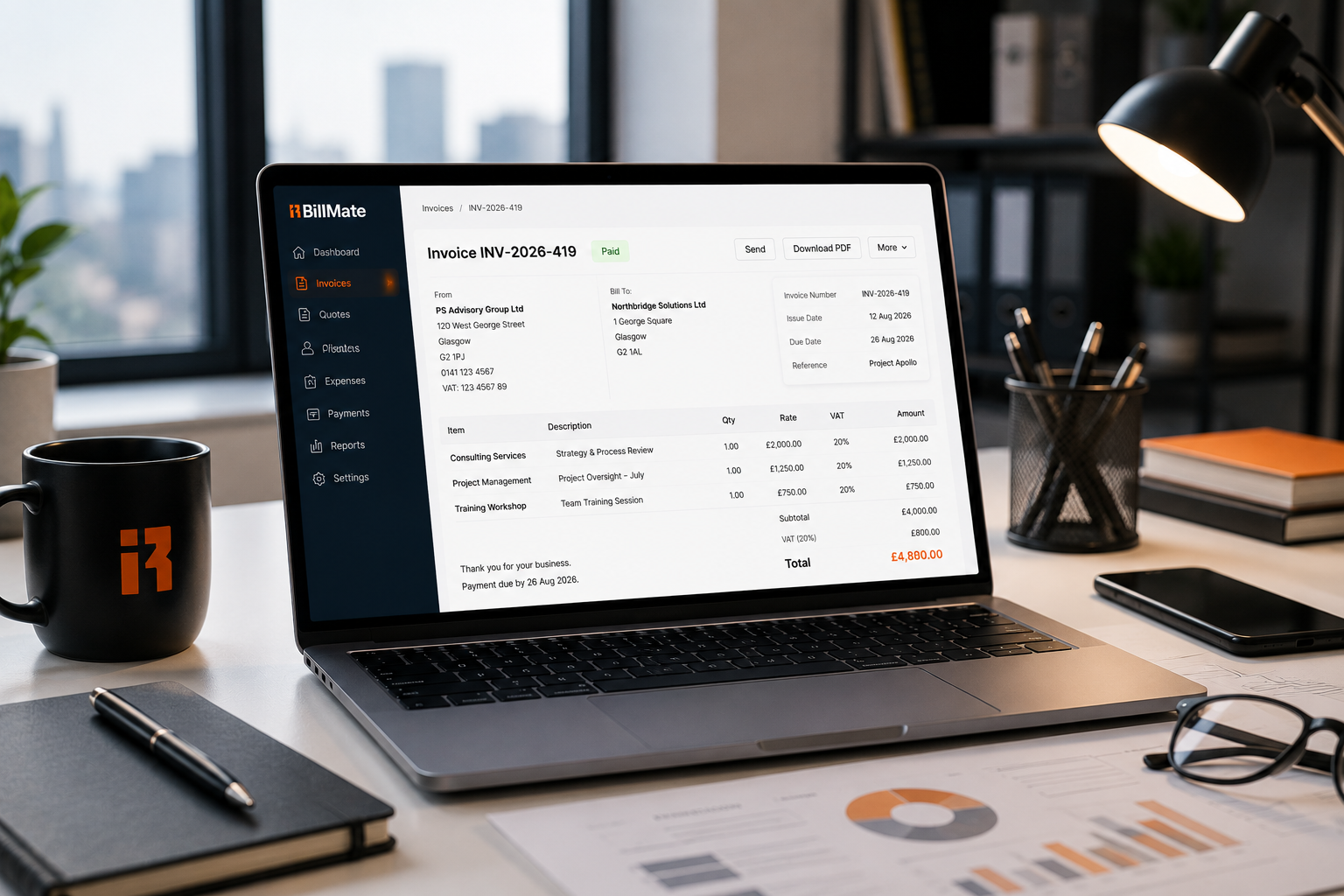
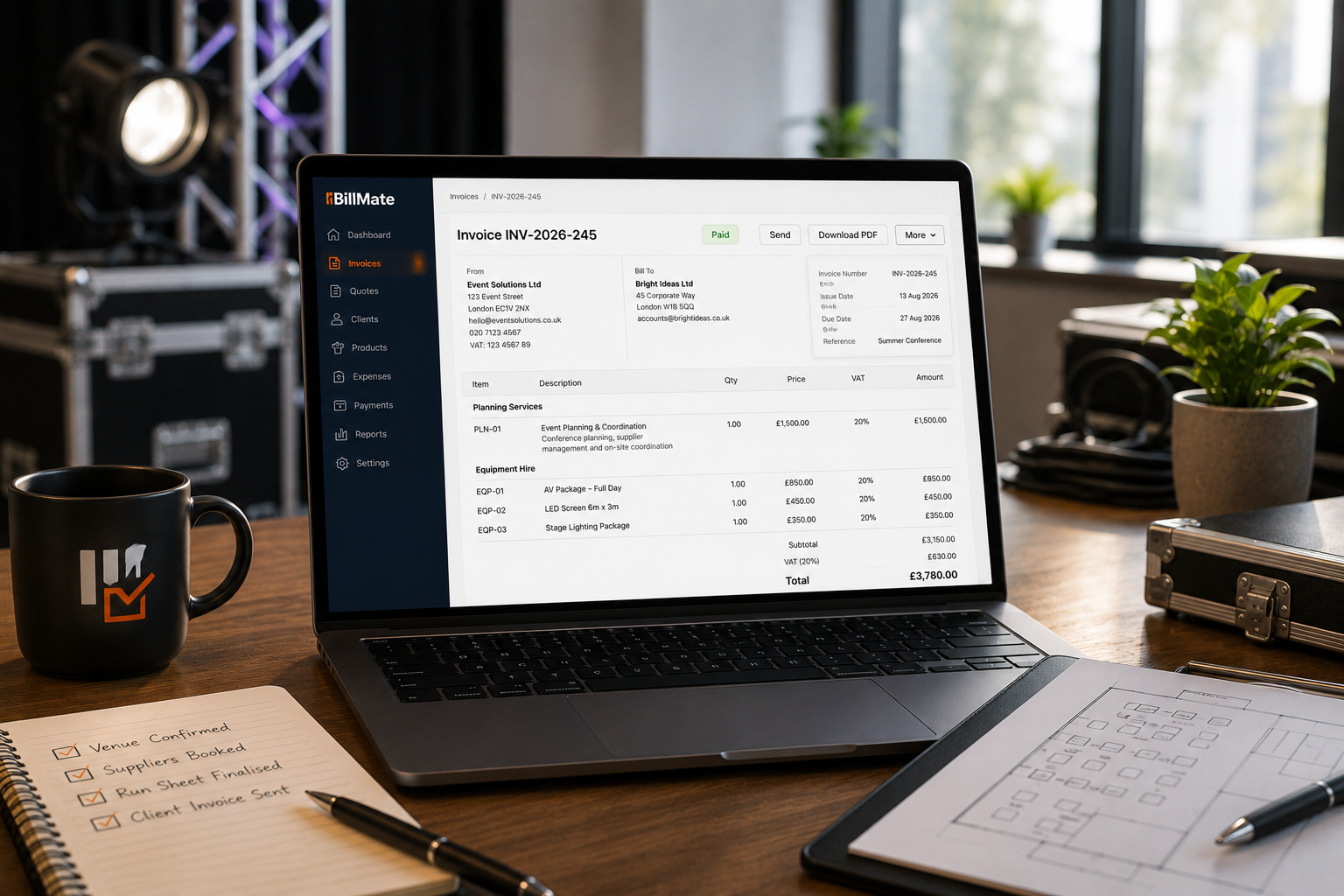
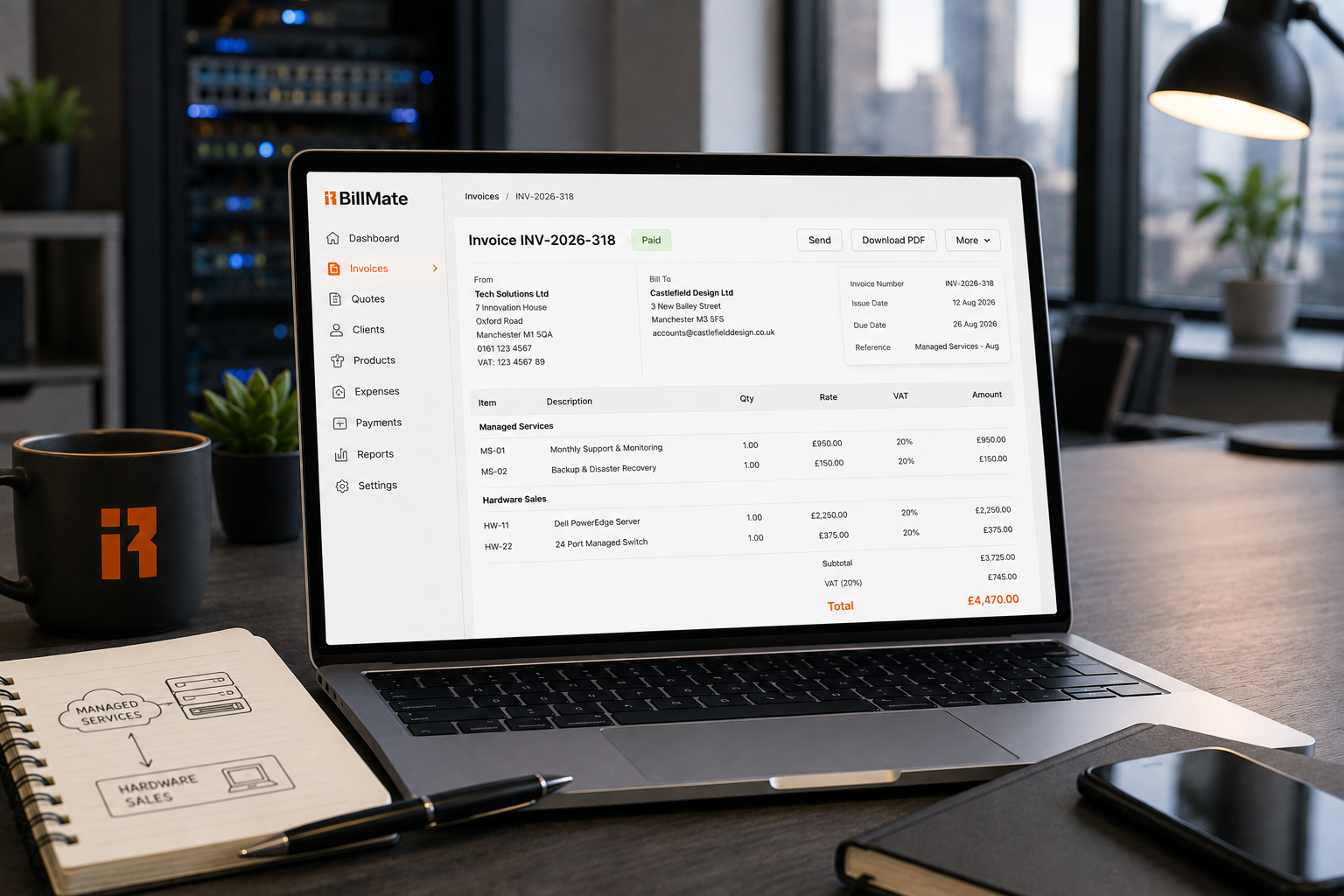
Every invoice is now emailed to the customer the moment the job is signed off, using a professional template with payment terms and tax lines clearly itemised. The customer gets a clean PDF they can find again, and the office sees the invoice appear in the Web App instantly — there is no longer a gap between the work finishing and the record existing.
How They Use BillMate Day-To-Day
Engineers raise invoices at the customer's door before leaving the job. The office watches live tracking in the Web App, so unpaid invoices are visible at a glance rather than discovered at month-end, and automated reminders go out to anyone drifting past terms — the chasing happens by itself.
Because the app and Web App share one database, nothing is entered twice. The invoice an engineer raises on-site is the same record the office reconciles, the same line in the analytics, and the same entry in the HMRC-aligned tax view when the quarter closes. The weekend of carbon-copy archaeology is simply gone.
The Features Doing The Heavy Lifting
Three capabilities carried most of the improvement for this team:
- On-site iOS invoicing, emailed to the customer the moment a job is signed off
- Live payment tracking with automated reminders for anyone past terms
- One shared database across app and Web App, so nothing is entered twice
- An HMRC-aligned tax view that makes quarter-end a review, not a rebuild
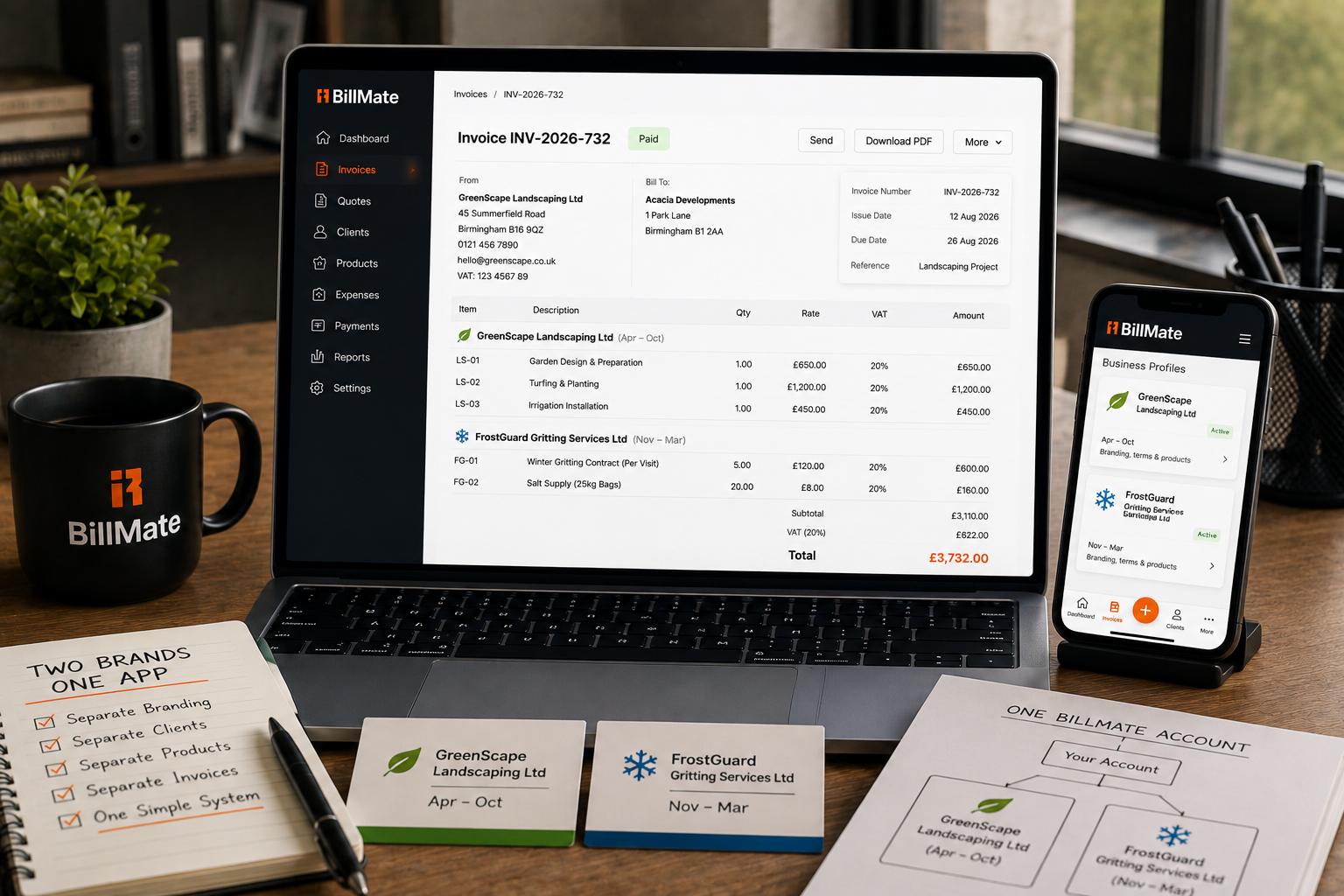
If the business later runs a second trading name, multi-business support keeps each one's invoices and records cleanly separate under one login.
The Results
Within the first quarter of switching, the numbers moved decisively:
- Average payment time reduced from 21 days to 9
- Higher customer satisfaction from clean email invoices and downloadable PDFs
- App-and-Web sync that eliminated duplicate entry
- Unpaid invoices visible at a glance, with reminders sent automatically
- An HMRC-aligned tax view that simplified quarter-end summaries
"Customers stopped losing invoices because there was nothing to lose. It lands in their inbox before our van leaves the street, and we can see exactly who has paid without ringing anyone."
Operations Manager, Manchester maintenance team
Advice For Other Trades And Maintenance Teams
The team's takeaway was that speed of payment starts with speed of invoicing. If the record only exists on paper the customer might lose, the money will always be slow and the chasing will always be manual. Invoice at the door, email it while the job is fresh, and let live tracking and automatic reminders do the follow-up. Paid in nine days instead of twenty-one is what happens when the invoice never gets lost.
Other trades have taken the same route: see how a solo contractor moved from shoebox receipts to clean records, or how an electrical firm powered up its payment speeds.