For a one-person trade, the admin is the second job nobody agreed to. This Leeds contractor ran the business from a shoebox for years — until switching to on-site digital invoicing meant the invoice was done before the van left the street, expenses logged themselves as the year went, and January stopped being a horror story.
The Challenge
For years the contractor ran everything out of a shoebox: paper receipts collected in the van, invoices handwritten at the kitchen table, and photos of paper slips texted to customers as a record. It worked, barely, until it was time to be paid or time to file.
The trouble was that a photo of a handwritten slip gets treated with roughly the seriousness it projects. Payments drifted, because there was nothing that looked like a real invoice to act on. Records had gaps, because paper goes missing. And self-assessment meant losing a January weekend to reconstructing the whole year from a box.
It was also eating actual time. Every other Sunday went to paperwork that only existed because nothing had been captured properly when the work was done.
The Switch To BillMate
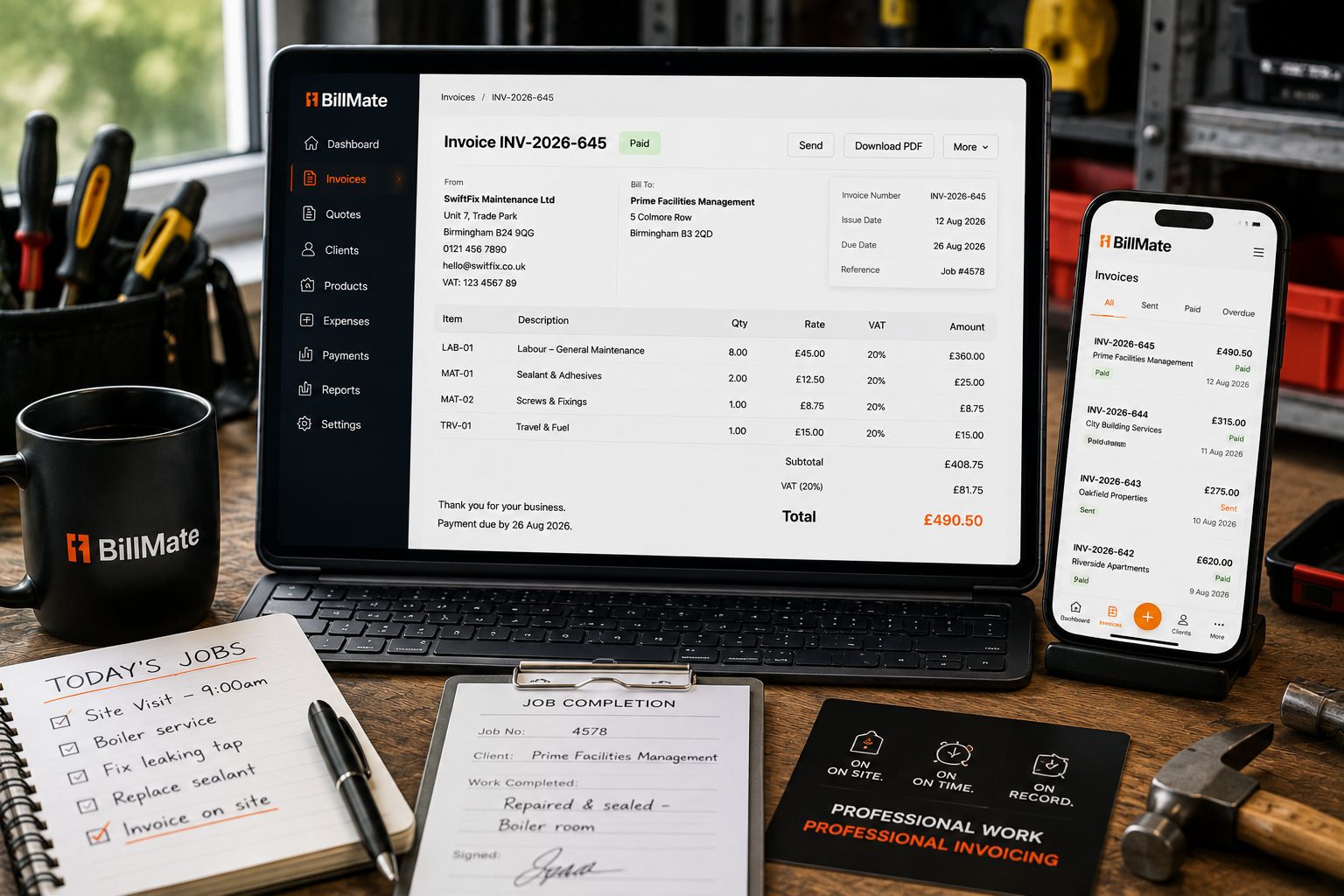
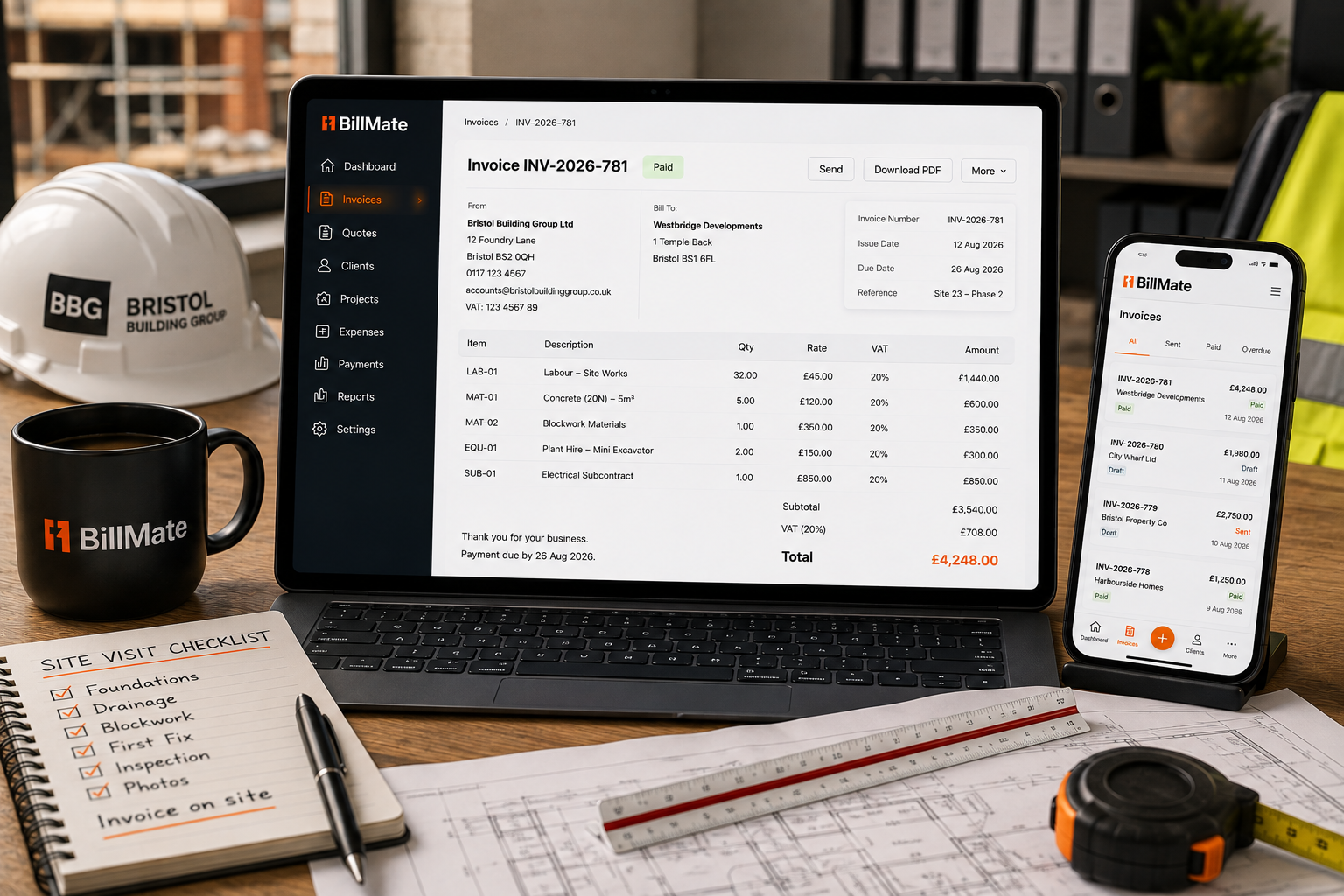
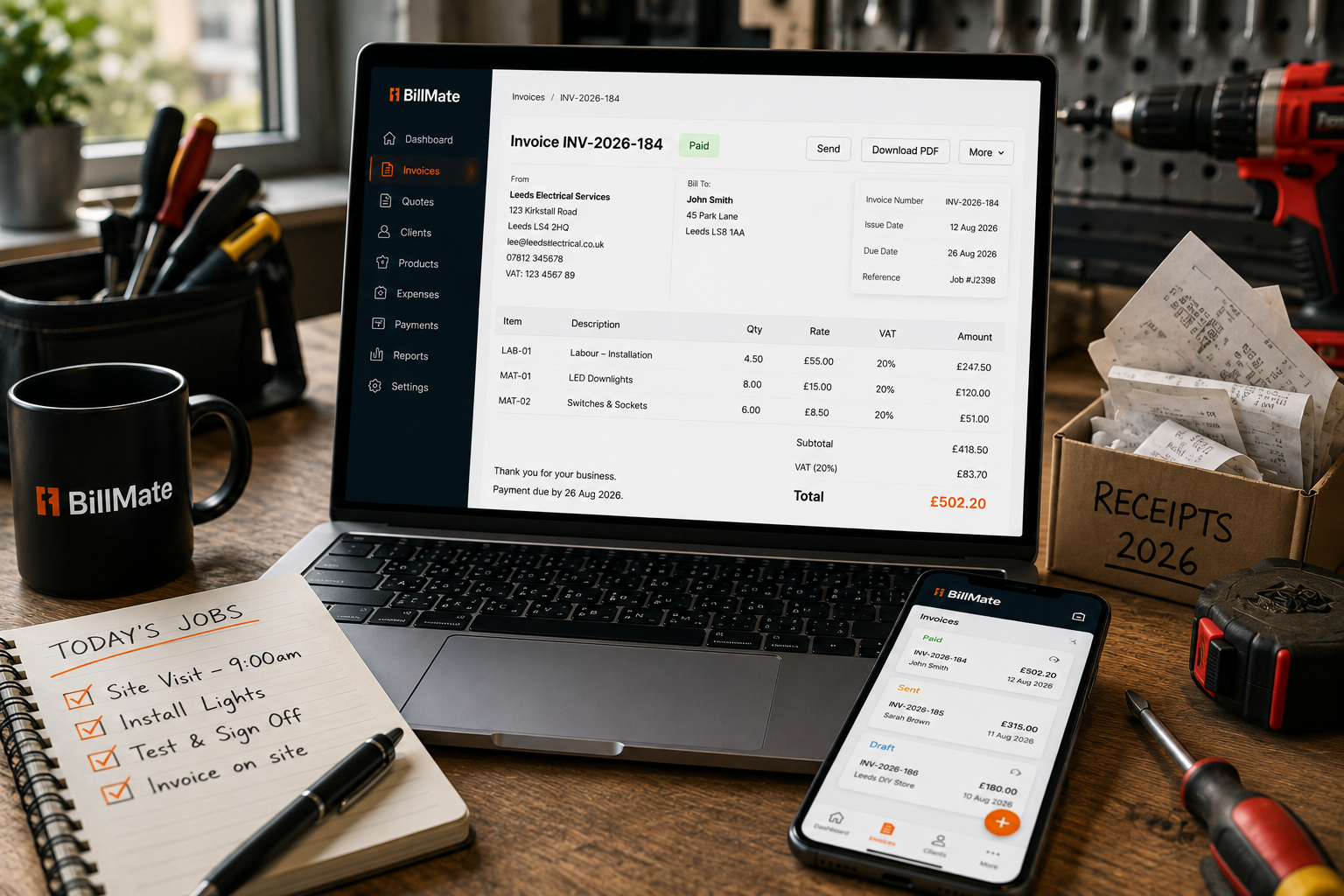
BillMate replaced the kitchen table with the customer's driveway. Invoices are generated on-site from the iOS app using professional templates, and emailed to the customer before the van pulls away. The record is created at the moment of the work, not rebuilt from memory days later.
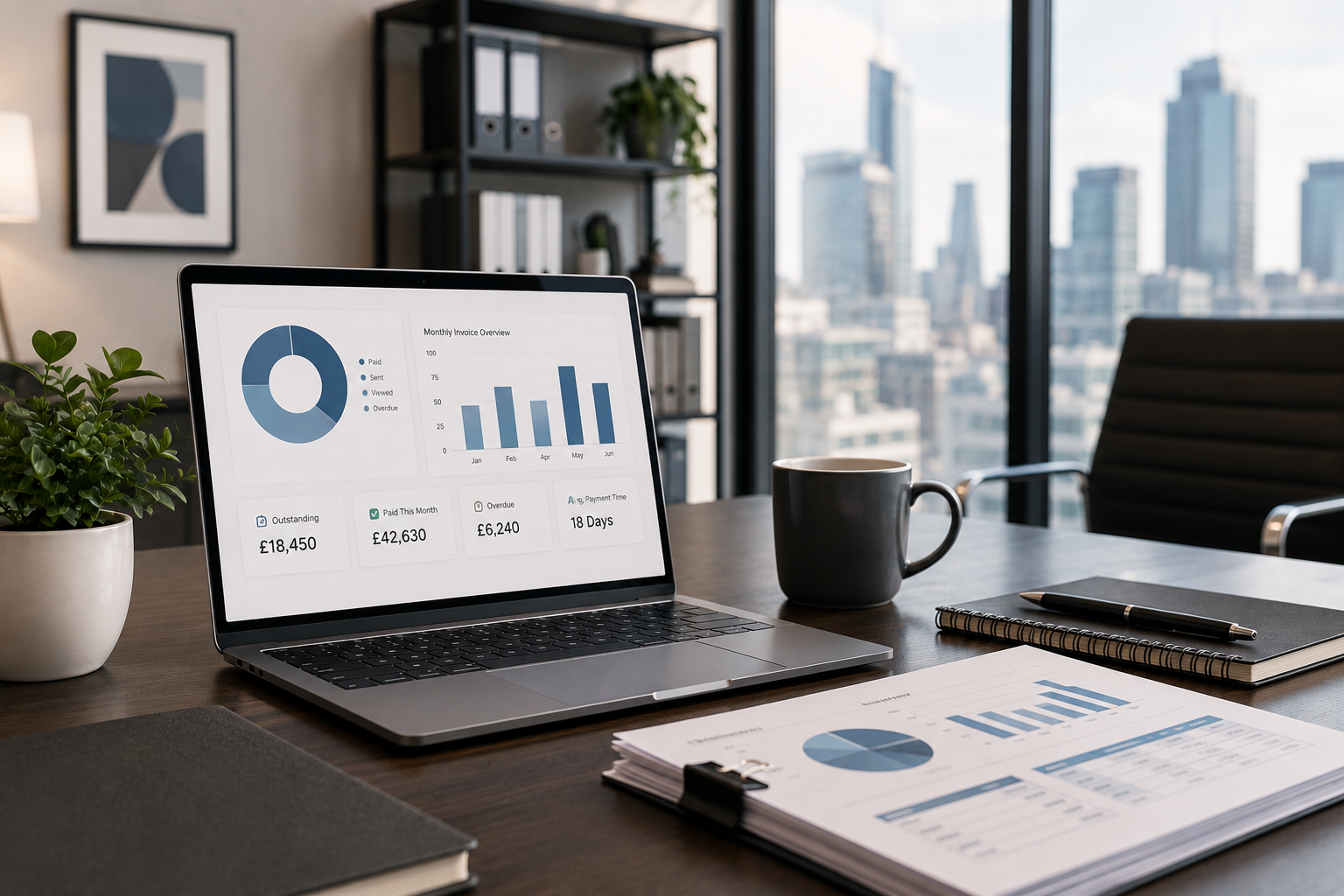
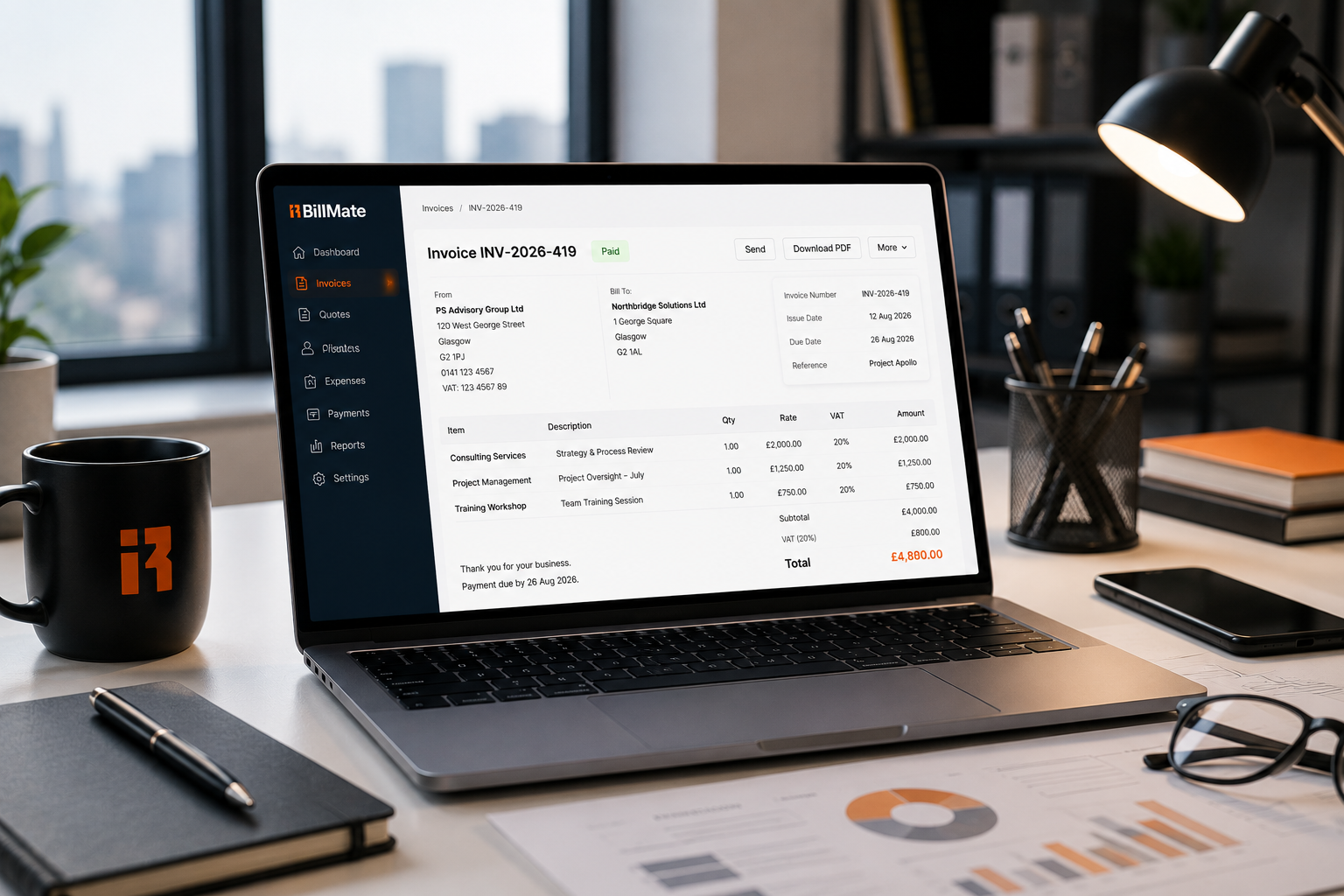
The Web App provides a full dashboard of payments and expenses, so the state of the business is visible in one place instead of scattered across a shoebox, a text-message history and memory. Nothing has to be remembered, because everything has been captured.
How They Use BillMate Day-To-Day
Each job now ends the same way: raise the invoice in the app, email it, drive off. Customers receive something that looks like it came from an established business — because it did — and they pay accordingly, which quietly fixed the drift that handwritten slips used to cause.
Expenses are logged as they happen rather than hoarded as paper, so the shoebox simply stopped filling up. When self-assessment comes around, the HMRC-aligned tax view means it is a review of numbers that already exist rather than an archaeology project — and the every-other-Sunday habit is gone.
The Features Doing The Heavy Lifting
Three capabilities carried most of the improvement for this contractor:
- On-site iOS invoicing with professional templates, emailed before leaving the job
- Expenses logged as they happen, replacing the shoebox of receipts
- An HMRC-aligned tax view that turns self-assessment into a review
- App-and-Web sync so the whole business sits in one dashboard
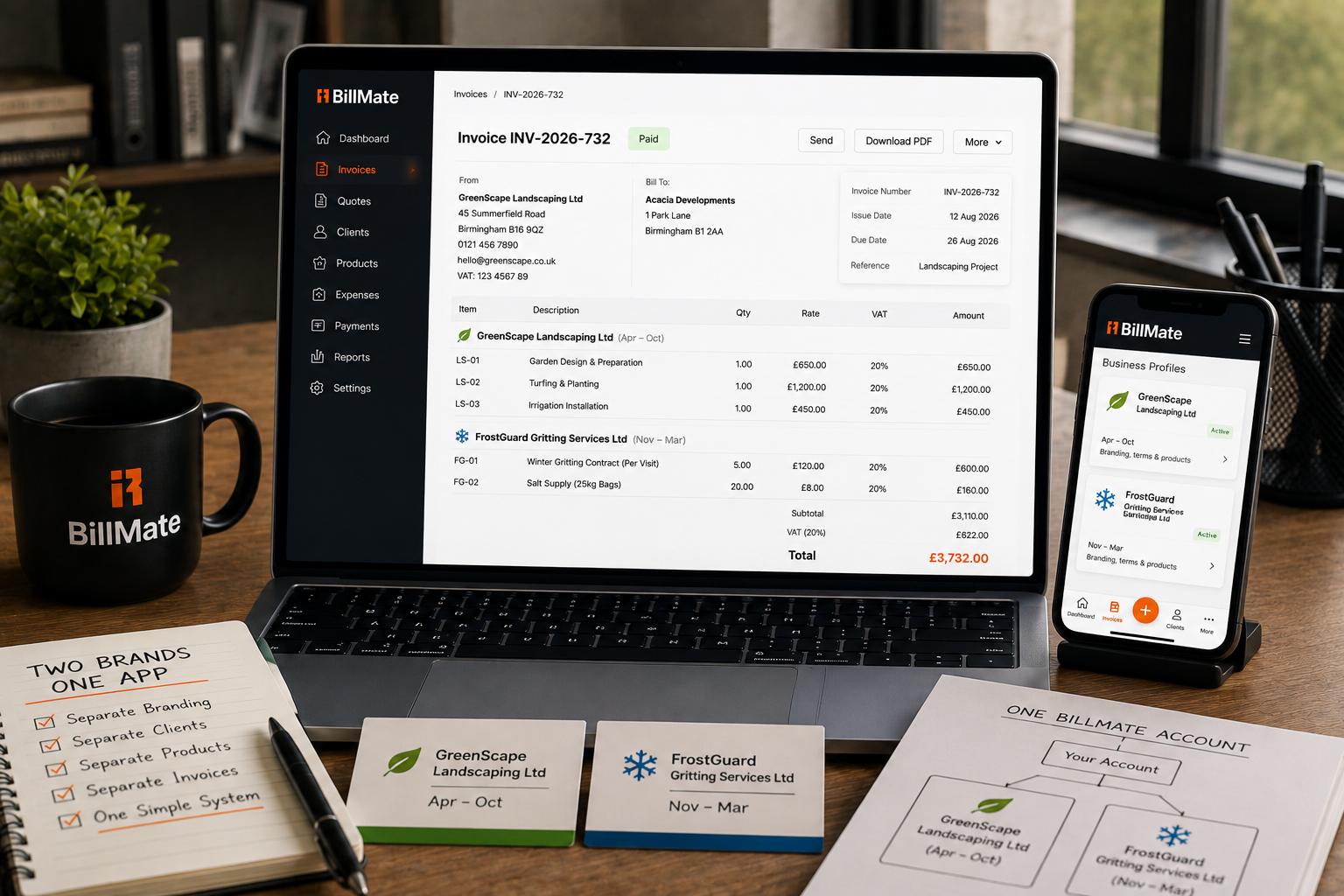
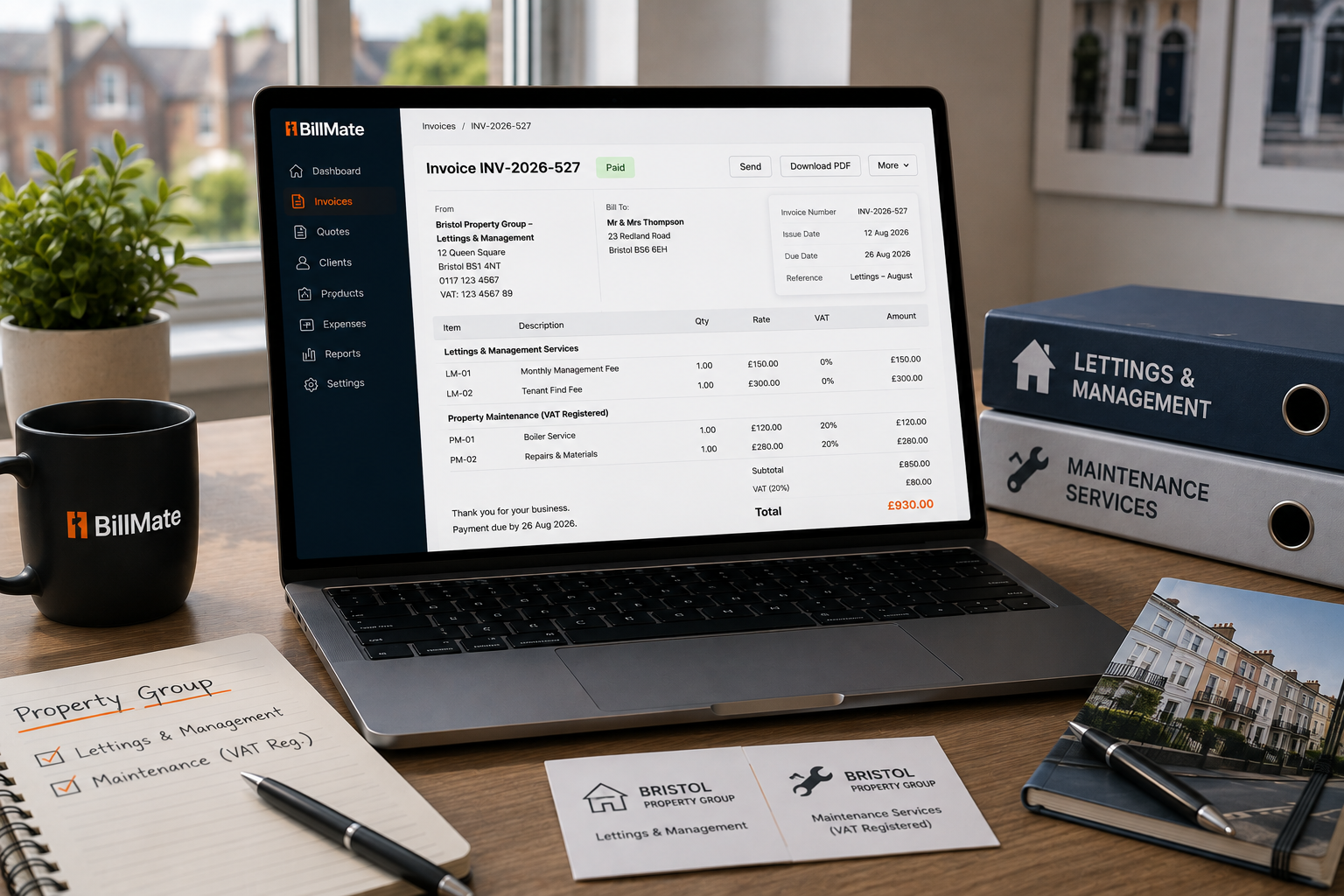
If the trade later adds a second venture, multi-business support keeps each one's invoices and records cleanly separate under one login.
The Results
The change was less about one number and more about the weekends it gave back:
- Professional-looking invoices that improved customer trust and prompted quicker payment
- End-to-end tracking that reduced missed and drifting payments
- An HMRC-aligned tax view that made self-assessment straightforward
- App-and-Web sync that removed the weekend admin backlog entirely
- Roughly every other Sunday handed back across the year
"I used to lose every other Sunday to paperwork. Now the invoice is done before I have left the customer's street, and January stopped being a horror story."
Self-employed contractor, Leeds
Advice For Other Sole Traders
The contractor's takeaway was to capture the record at the job, not at the kitchen table. Invoice on-site so it actually goes out, log the expense the moment you incur it, and let an HMRC-aligned view keep the tax picture current all year. Do that and the paperwork stops being a second job — and the weekends it used to swallow come back.
Other trades have taken the same route: see how a maintenance team moved from handwritten receipts to digital trust, or how an electrical firm powered up its payment speeds.