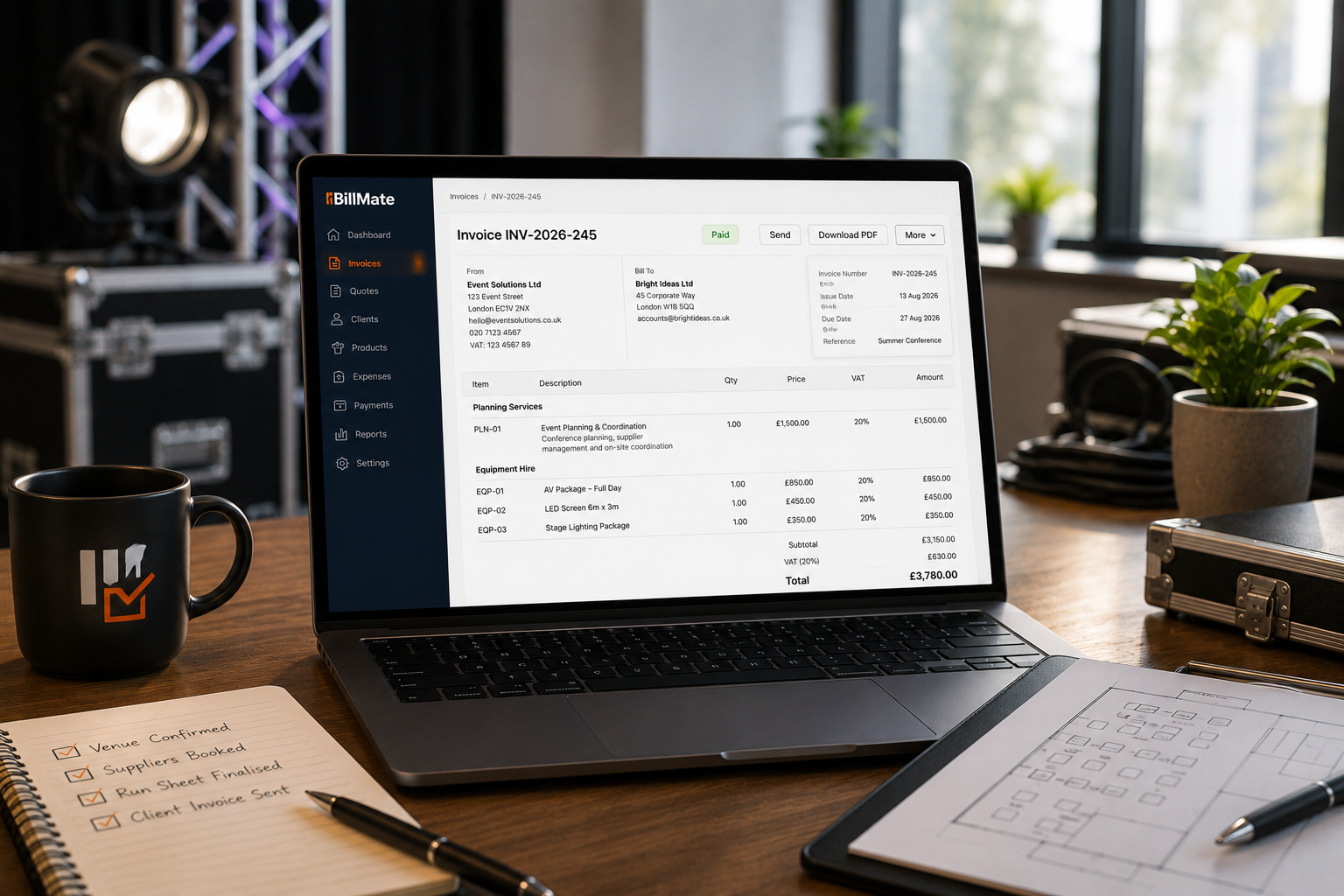
Event planning is a service; AV equipment hire is goods with insurance disclaimers attached. Billing them the same way is not a tidiness problem — send a hire invoice under service terms and you have a legal and insurance one. This London company fixed it by giving each arm its own BillMate profile, so the correct terms are built in rather than remembered.
The Challenge
The eight-person company was billing both sides of the business through legacy desktop software that understood neither distinction. Staff manually edited terms and disclaimers into invoices depending on what was being sold — the kind of process that works fine until the one time it doesn't.
And the one time it doesn't is expensive. An equipment hire invoice going out with service terms, or missing its insurance disclaimer, is not a cosmetic slip; it is a legal and insurance exposure. Every invoice carried a small manual checklist, and every checklist carried risk that scaled with how busy the team was.
Because the two revenue streams were only loosely separated in the software, leadership also struggled to see the business cleanly — planning fees and hire income tangled together in a tool that treated them as the same thing.
The Switch To BillMate
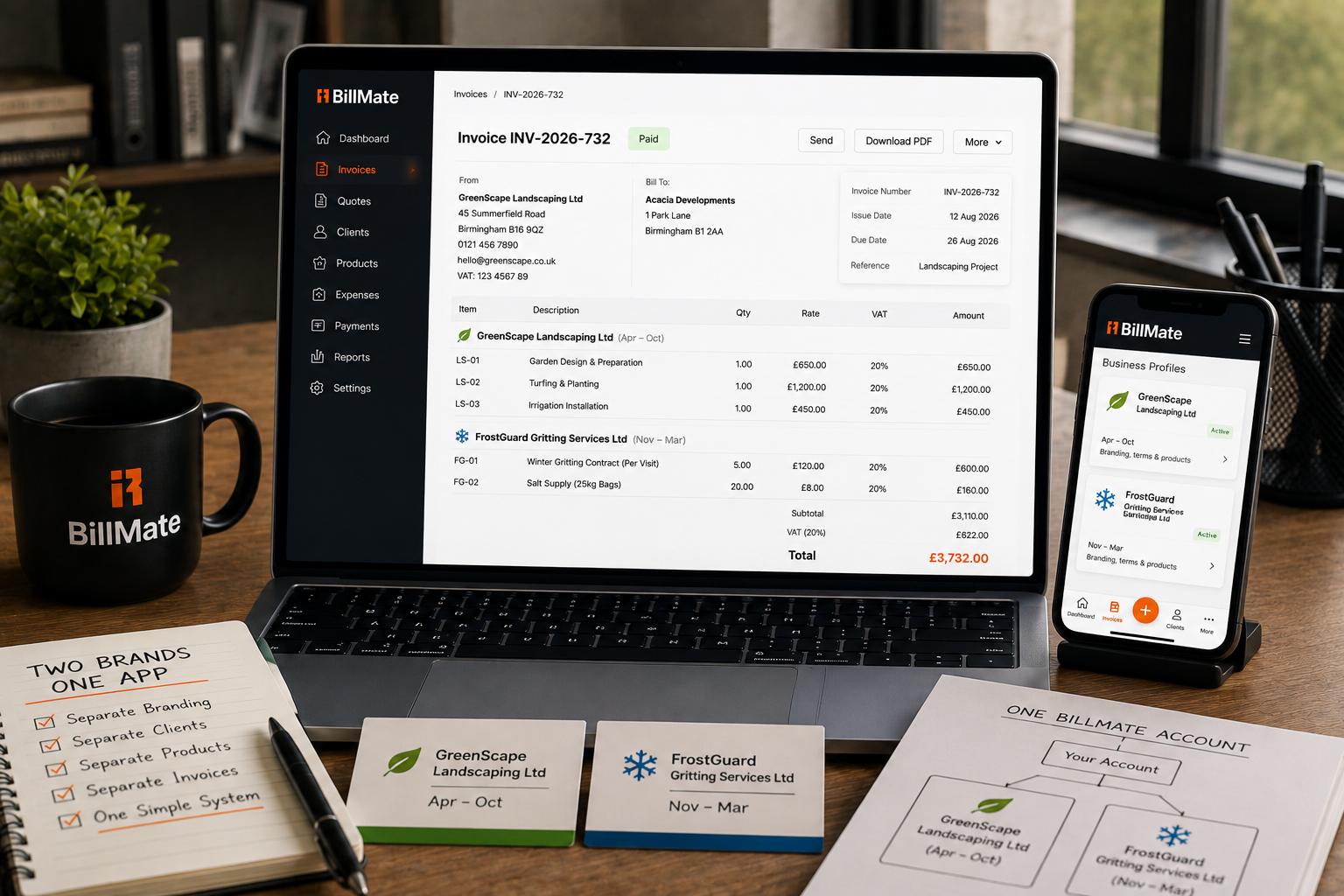
BillMate gave each arm its own dedicated profile. The planning profile carries service terms; the hire profile carries the hire terms and insurance disclaimers. The correct wording is now a property of the profile, not a thing staff have to remember, so the compliance step happens whether anyone is thinking about it or not.
Staff switch profiles in seconds depending on whether they are billing time or renting out assets, and the invoice that results is correct by construction. The manual checklist simply disappeared, and with it the category of error it existed to prevent.
How They Use BillMate Day-To-Day
The hire division's inventory billing is now streamlined: itemised kit lists with the right disclaimers, produced as fast as a standard invoice. The planning arm's fees go out under clean service terms. Neither side has to borrow the other's paperwork or edit around it.
Admin is centralised across both revenue streams, so leadership sees the whole business in one place while every customer-facing document stays strictly arm-specific. It is the combination the old software could not manage — one internal view, two correct external identities.
The Features Doing The Heavy Lifting
Three capabilities carried most of the improvement here:
- Dedicated profiles that bake the correct terms and disclaimers into each arm
- Second-fast switching between billing services and hiring equipment
- Itemised inventory billing for the hire division, as quick as a normal invoice
- Centralised admin so leadership sees both streams in one view
The same multi-business support keeps any number of arms cleanly separated under one subscription.
The Results
The company counts the results in errors that can no longer happen:
- Custom terms and conditions applied automatically to each business arm
- Streamlined, itemised inventory billing for the hire division
- Centralised admin across two distinct revenue streams
- The manual checklist retired, removing a whole class of legal and insurance errors
- A compliant hire invoice prepared in a fraction of the previous time
"The right terms and disclaimers go out automatically depending on which side of the business is billing. That used to be a manual checklist. Now it is impossible to get wrong."
Operations Director, London event services company
Advice For Other Event And Hire Businesses
The company's takeaway was to make compliance a property of the system, not a discipline. If one part of your business sells time and another sells goods with disclaimers attached, give each its own profile so the right terms travel with the right invoice automatically. Once correctness stops depending on a busy person remembering a checklist, the risk goes away and the admin gets faster at the same time.
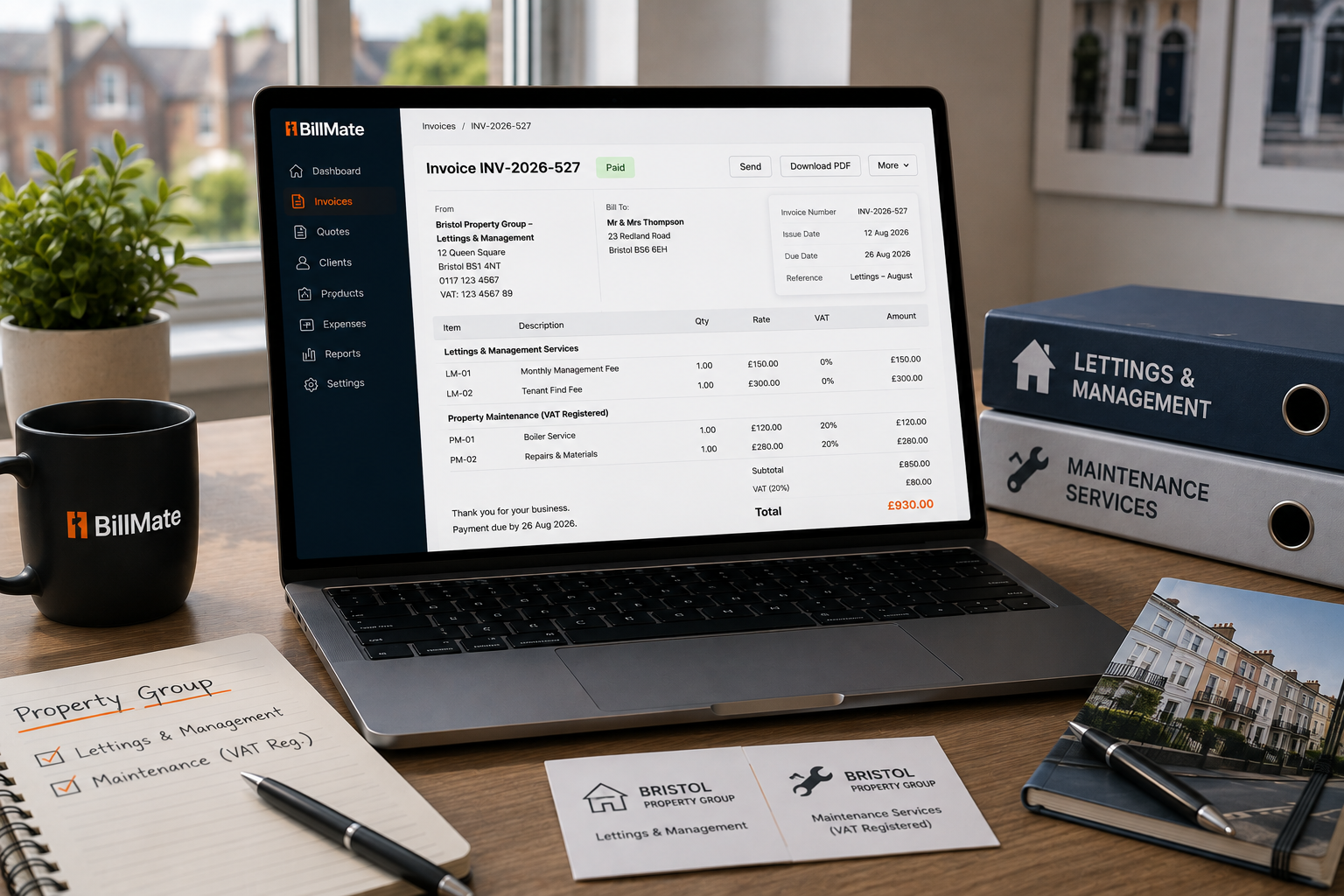
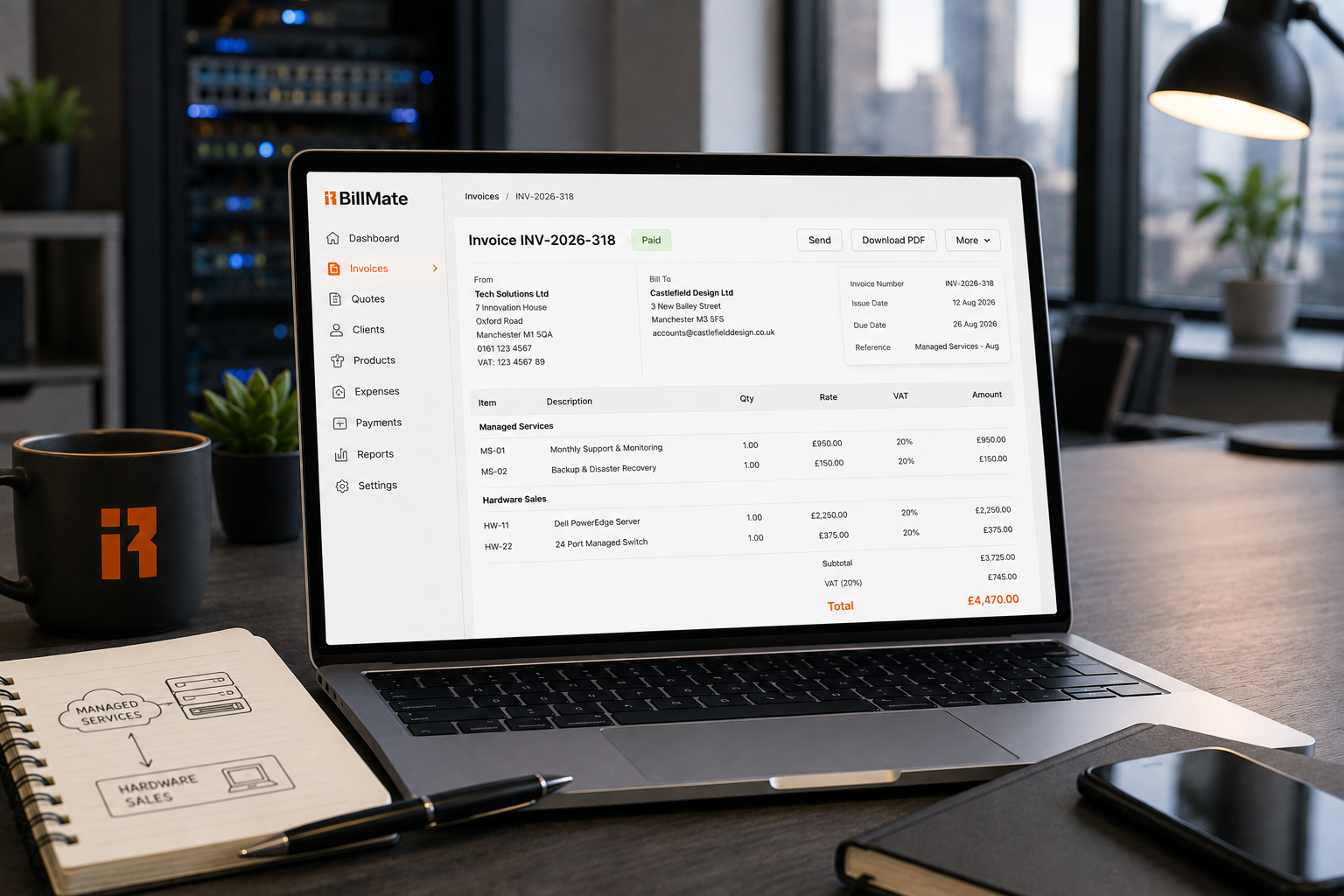
Other businesses splitting services from goods have taken the same route: see how an IT consultant separated managed services from hardware sales, or how a property group separated lettings from maintenance.