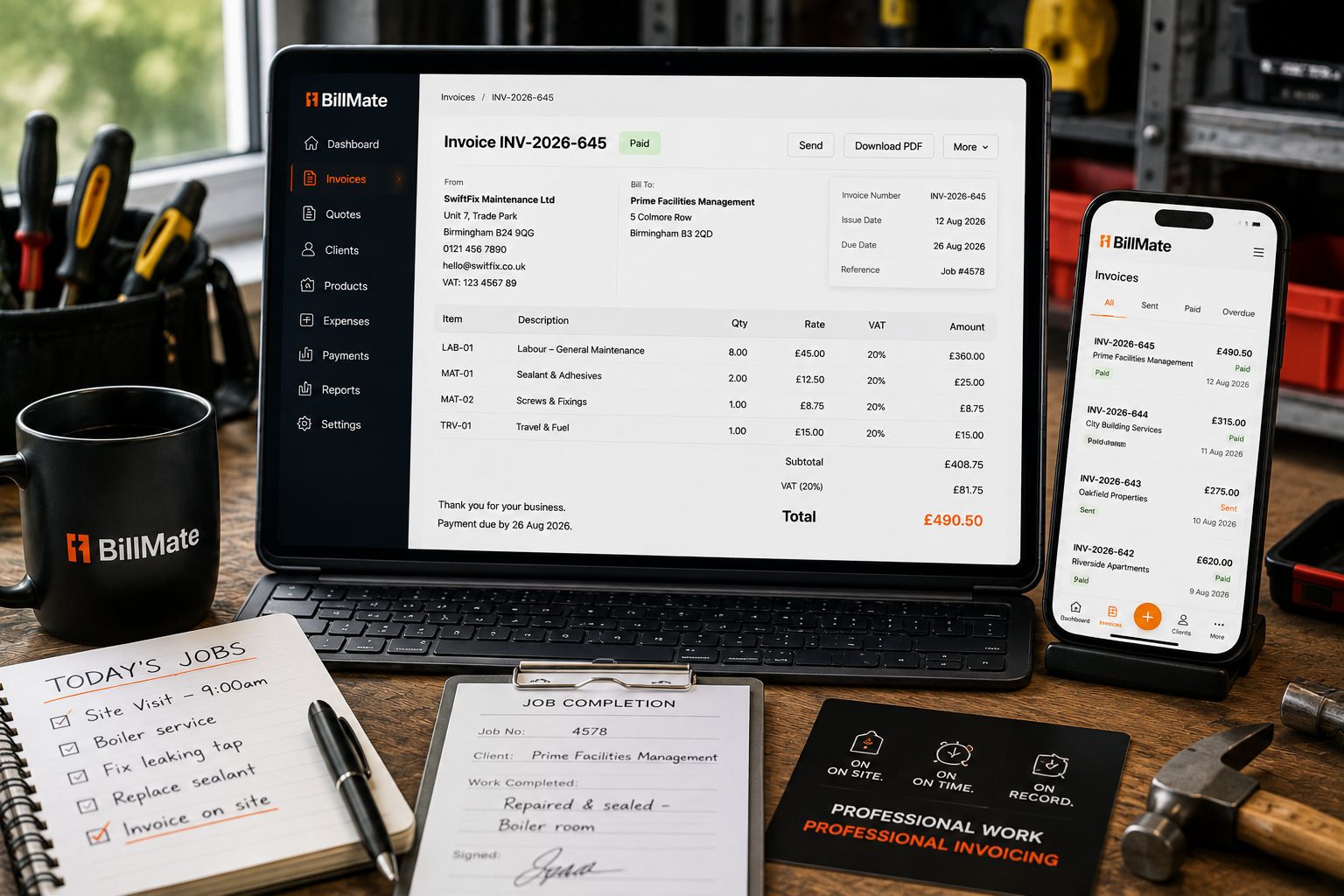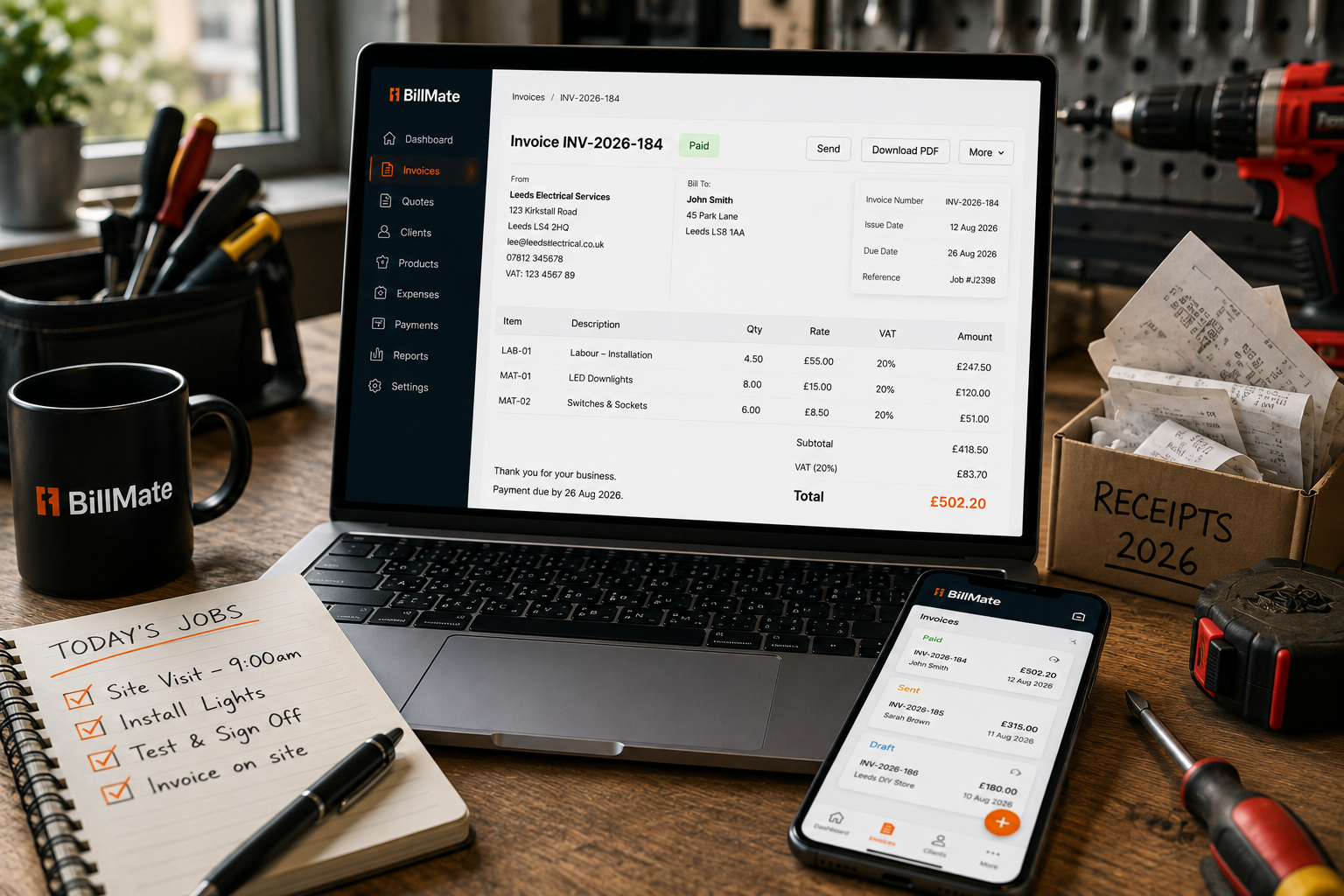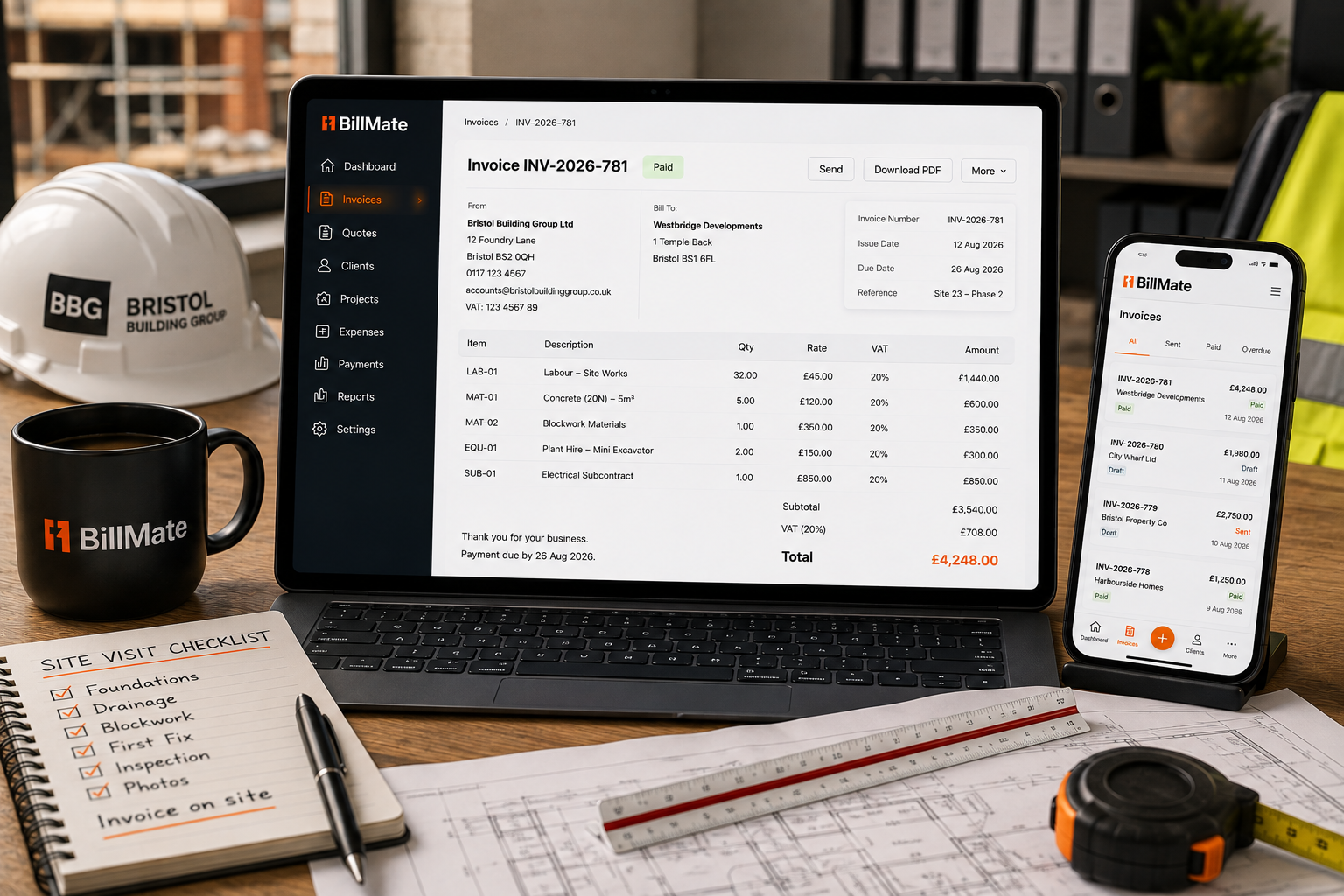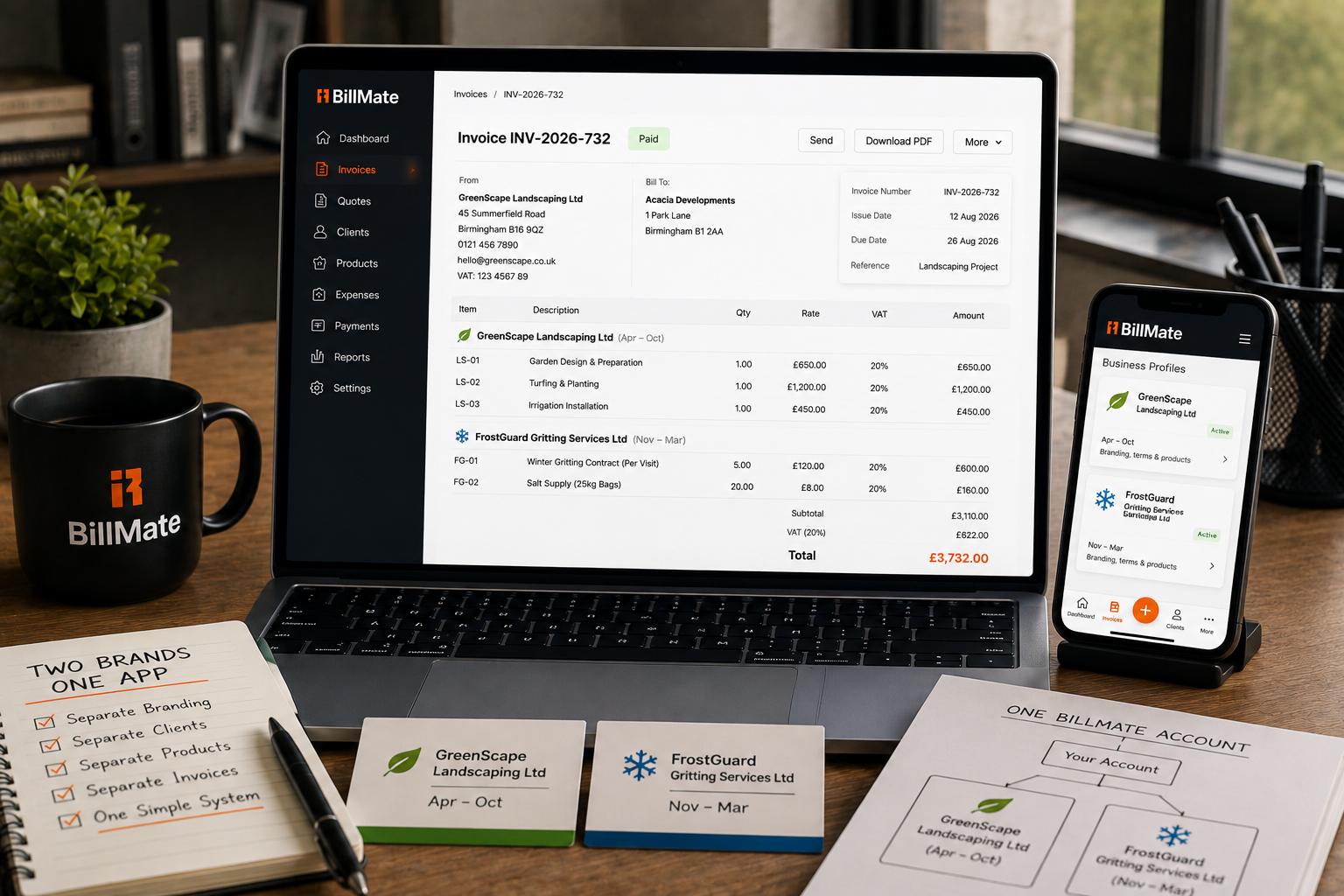
A small Edinburgh boutique had spent years building a look customers recognised on the street, in the window and online — and then handed them an invoice that looked like it came from someone else entirely. This is how switching to BillMate's branded invoicing closed that gap, sped up approvals, and turned quarterly filing from a dreaded afternoon into a twenty-minute job.
The Challenge
For a brand-led retailer, every touchpoint is part of the story — the bag, the tissue paper, the receipt, the follow-up email. The boutique had all of those working in harmony except the last and arguably most important one: the invoice. Their previous provider's templates were rigid and generic, with no meaningful control over logo placement, colour or layout, so the document that confirmed a sale looked nothing like the brand that made it.
That mismatch was more than cosmetic. When a supplier or wholesale customer received a plain, off-brand invoice, it quietly undercut the premium positioning the shop worked hard to protect. Line items and tax were laid out inconsistently, which meant every invoice invited a second look and, occasionally, a query that slowed payment.
Behind the counter the problem compounded. Managers had no convenient way to audit sales and unpaid invoices without wading through the provider's clunky reporting, so they never quite trusted the running total in their heads. Worst of all, quarterly filings regularly surfaced small discrepancies that took hours to trace back through exports and spreadsheets — the numbers on screen never quite matched the numbers being filed.
The Switch To BillMate
The move was deliberately low-drama. The team imported their customers, set up their template once, and started billing. BillMate's templates and styling options let them produce invoices, quotes and emails that actually look like the brand: the right logo, the right colours, a clean layout, and identical output whether a document is sent from the shop floor or the back office.
Crucially, the branding is applied automatically to every document type. There is no "remember to style this one" step, so a rushed invoice at 5pm looks exactly like a carefully prepared one. The Web App gives managers a live audit view of sales and unpaid invoices, while the iOS app handles quick customer adds and on-the-spot billing at the counter or at trade events, syncing back instantly so the office is never working from stale figures.
How They Use BillMate Day-To-Day
Billing presentation is now consistent across every channel — email, PDF and in person — which sounds cosmetic until you watch approvals speed up because line items and tax are laid out clearly every single time. Wholesale buyers who used to ask for a clarified breakdown now simply pay, and the team spends far less time re-explaining what a charge covers.
At the counter, staff raise an invoice on the iOS app in seconds and the customer receives a branded email before they have left the shop. At trade events, the same flow works away from the till, so nothing is scribbled on paper to be re-keyed later. In the office, managers open the live dashboard rather than requesting a report, checking the day's sales and chasing anything unpaid while it is still fresh.
The tax section did quiet, unglamorous work too. Because the figures in the tax view are the same figures on the dashboard, quarterly filings stopped surfacing surprises — the owner is filing numbers they have effectively already checked all quarter. What used to be an afternoon of cross-referencing became a short confirmation.
The Features Doing The Heavy Lifting
Three capabilities carried most of the improvement for this boutique:
- Branded, reusable templates so every invoice, quote and email is on-brand by default
- A live Web App audit view of sales and unpaid invoices, replacing exported reports
- An HMRC-aligned tax view that mirrors the dashboard, so filing numbers are pre-checked
- iOS billing at the counter and at events, synced instantly to the office
If you run more than one shop or brand, the same account extends cleanly with multi-business support, keeping each brand's invoices, clients and terms fully separate.
The Results
For a brand-led business, the wins were consistency first and speed second:
- Consistent billing presentation across every channel and document type
- Faster approvals thanks to clear, uniform line items and tax
- Improved customer confidence through professional, on-brand communication
- Tax-section clarity that cut errors and turned quarterly filing from an afternoon into about twenty minutes
- Roughly fifteen hours a year handed back on filing checks alone, before counting faster approvals
"Our invoices finally feel like part of the brand instead of an apology at the end of it. And our quarterly filing went from an afternoon of checking to twenty minutes."
Owner, Edinburgh boutique
Advice For Other Brand-Led Retailers
The boutique's takeaway was simple: treat the invoice as part of the brand, not an afterthought. Set the template up once so on-brand output is the default rather than a task, put a live sales view in front of whoever chases payment, and pick a tool whose tax figures are the same figures you see all quarter. If your billing currently looks like it belongs to another business, that is the cheapest brand upgrade available — and it pays for itself at filing time.
Businesses in similar situations have taken the same route: see how a creative agency made emailed invoices clients actually read, or how a self-employed contractor moved from shoe-box receipts to clean records.