On a busy construction job, the gap between the work finishing and the invoice landing is where money and goodwill leak away. This Bristol building group closed that gap by invoicing from site as work completes and syncing instantly with finance — turning weeks-late, dispute-prone billing into same-day, itemised invoices both ends of the business trust.
The Challenge
Across this 18-person building group, site and office ran on entirely different systems: paper and photos on-site, a legacy tool back in the office. The seam between them generated constant friction. Invoices built from site notes arrived late — sometimes weeks after the work — and by then nobody could remember the exact scope agreed on the day.
That delay was expensive in two ways. First, disputes over scope and rates were routine, because customers were seeing the detailed breakdown for the first time long after the job, with no shared record to point back to. Second, the lag pushed payment dates out and made cash flow lumpy and hard to predict.
Finance, meanwhile, spent its days reconciling rather than analysing. Unpaid invoices surfaced when someone happened to notice them rather than when they fell due, and pulling an accurate picture of what was owed across several live sites meant chasing supervisors for paperwork that was never in one place.
The Switch To BillMate
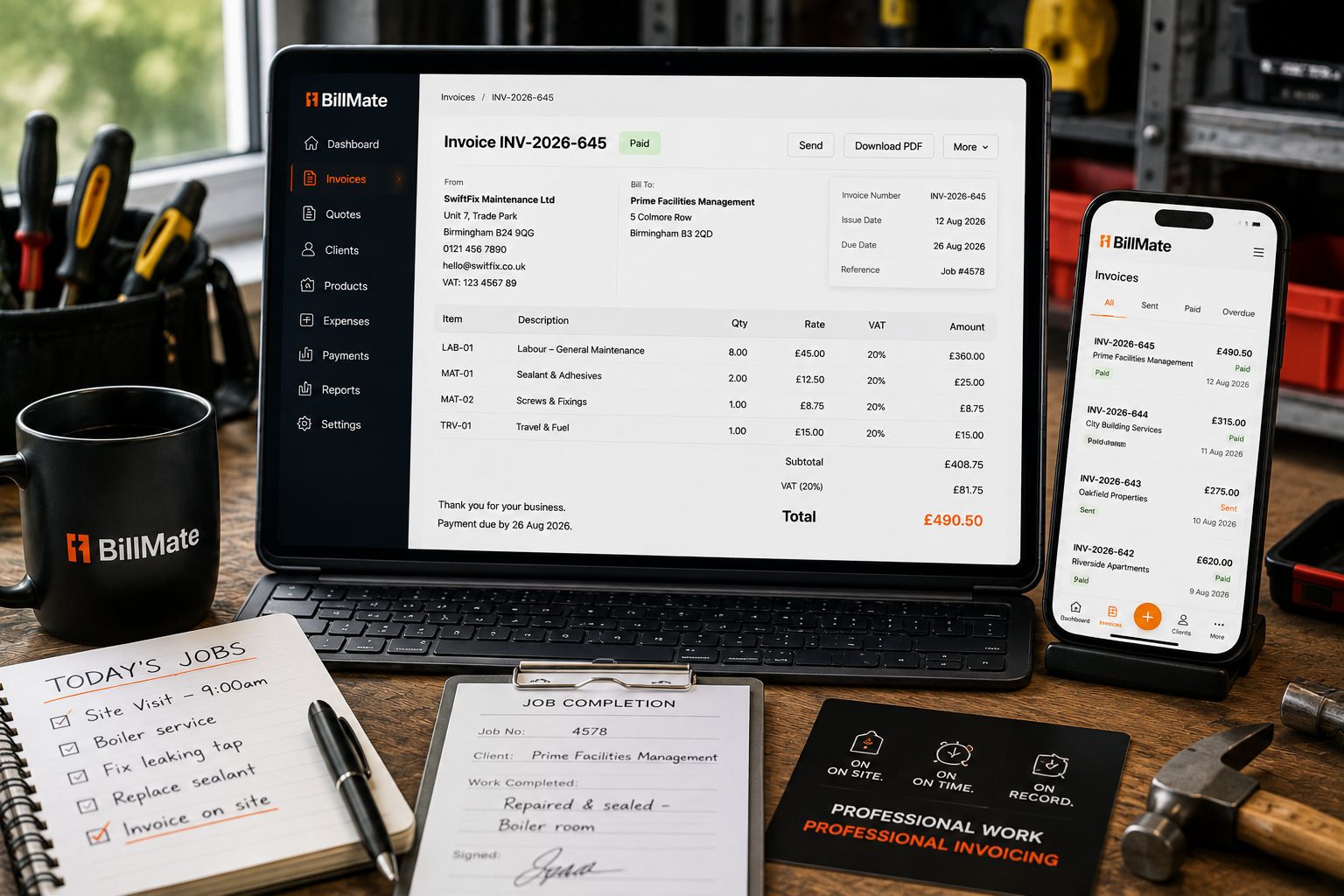
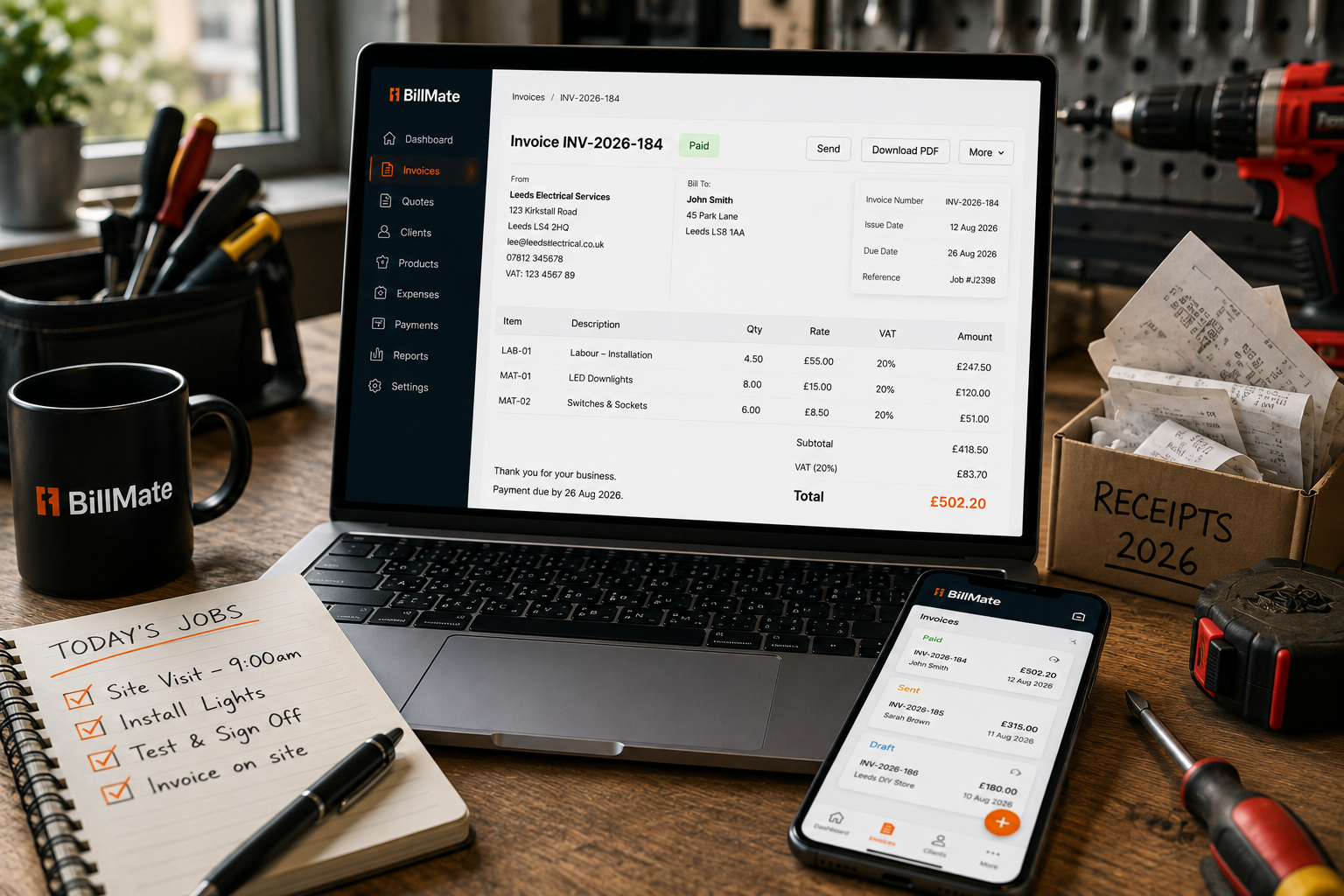
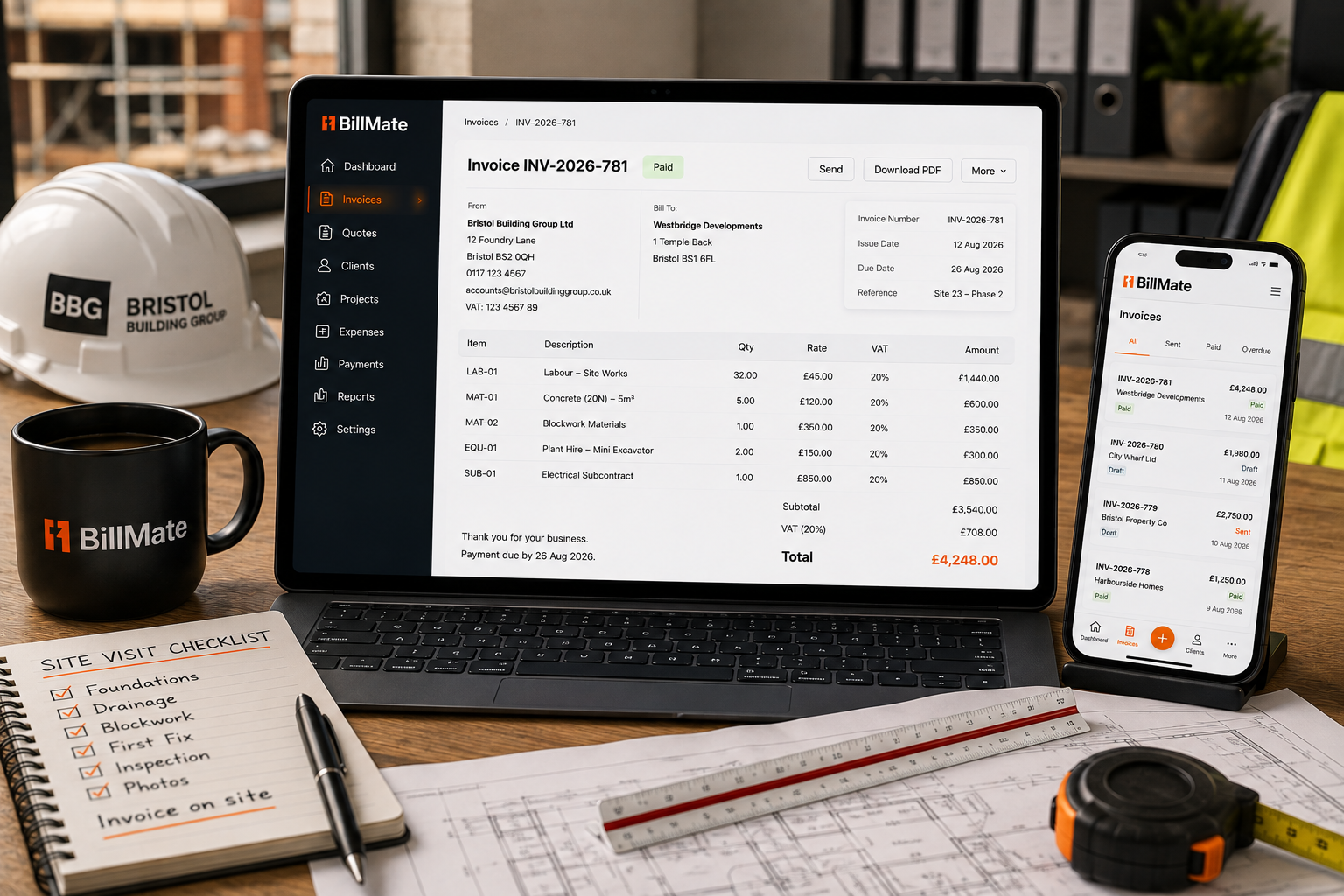
The fix was to remove the seam entirely. Site supervisors now issue invoices through the BillMate iOS app as work completes, and finance reconciles payments in the Web App. The instant sync means both ends of the business are looking at the same records at the same moment — there is no re-keying, and no window where site and office disagree about what has been billed.
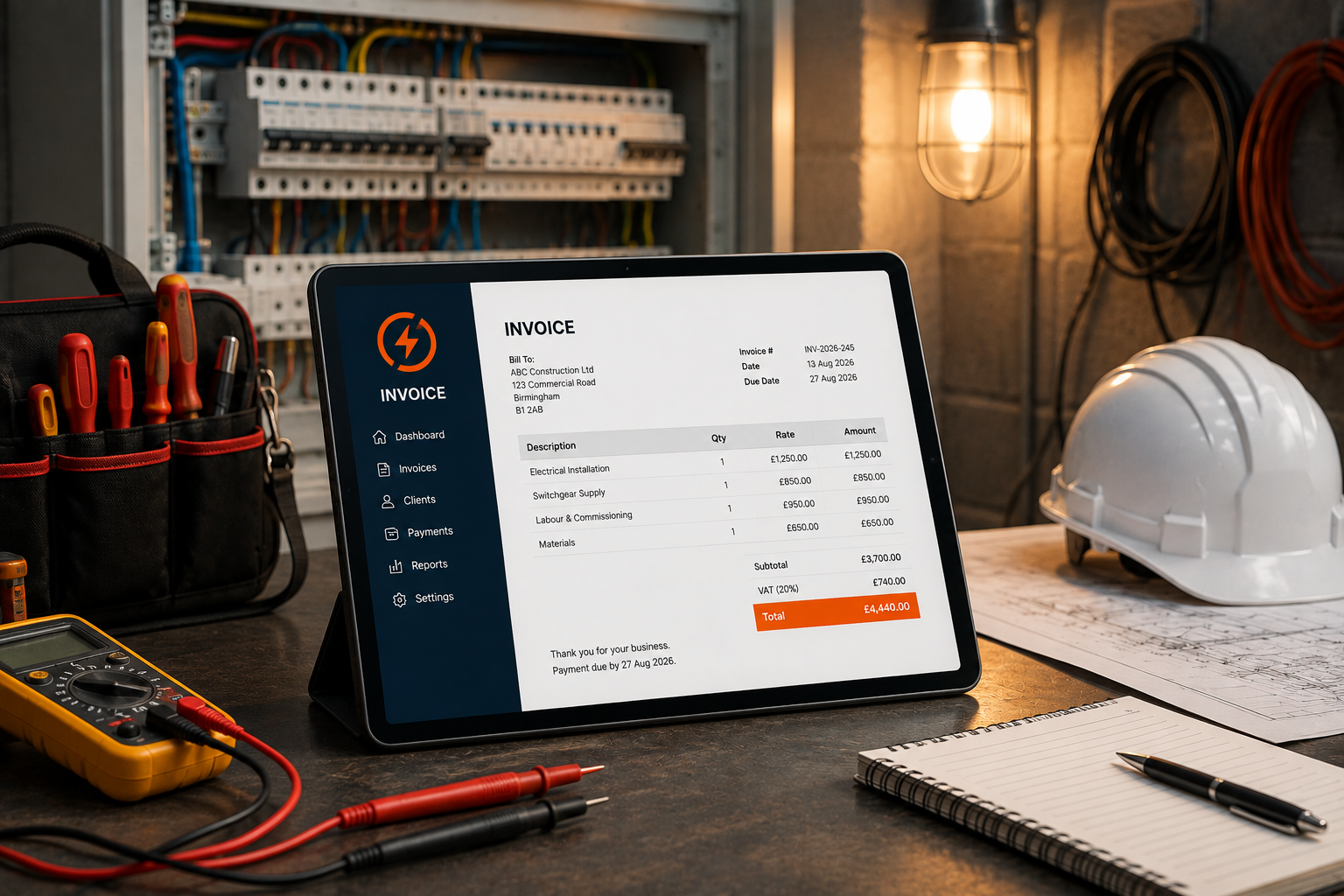
Email invoicing made scope and rates transparent from the start. Each invoice is itemised, dated, and sitting in the customer's inbox as the work finishes, which removes the ambiguity that disputes used to grow in. When a query does come up, everyone is pointing at the same document rather than reconstructing events from memory.
How They Use BillMate Day-To-Day
Supervisors treat the app as the last step of a job: work signed off, invoice raised, customer notified — before they have left site. Because the record syncs immediately, the office never works from stale figures and never waits on a paperwork drop-off at the end of the week.
Tracking flags unpaid invoices automatically for follow-up, so cash-flow management became a routine rather than a rescue operation. Leadership can open a live view of outstanding amounts across every site without asking anyone to compile anything, which makes forecasting far steadier than it was under the old paper-and-legacy split.
When external audits come around, the HMRC-aligned summaries mean the group hands over clean, exportable records instead of commissioning a last-minute paperwork sprint.
The Features Doing The Heavy Lifting
Three capabilities carried most of the improvement for this building group:
- On-site iOS invoicing that raises a bill the moment a job completes
- Instant sync to the Web App, so site and finance share one live record
- Itemised, dated email invoices that make scope and rates clear up front
- Automatic unpaid-invoice tracking with a live outstanding view across sites
- An HMRC-aligned tax view for clean records at audit time
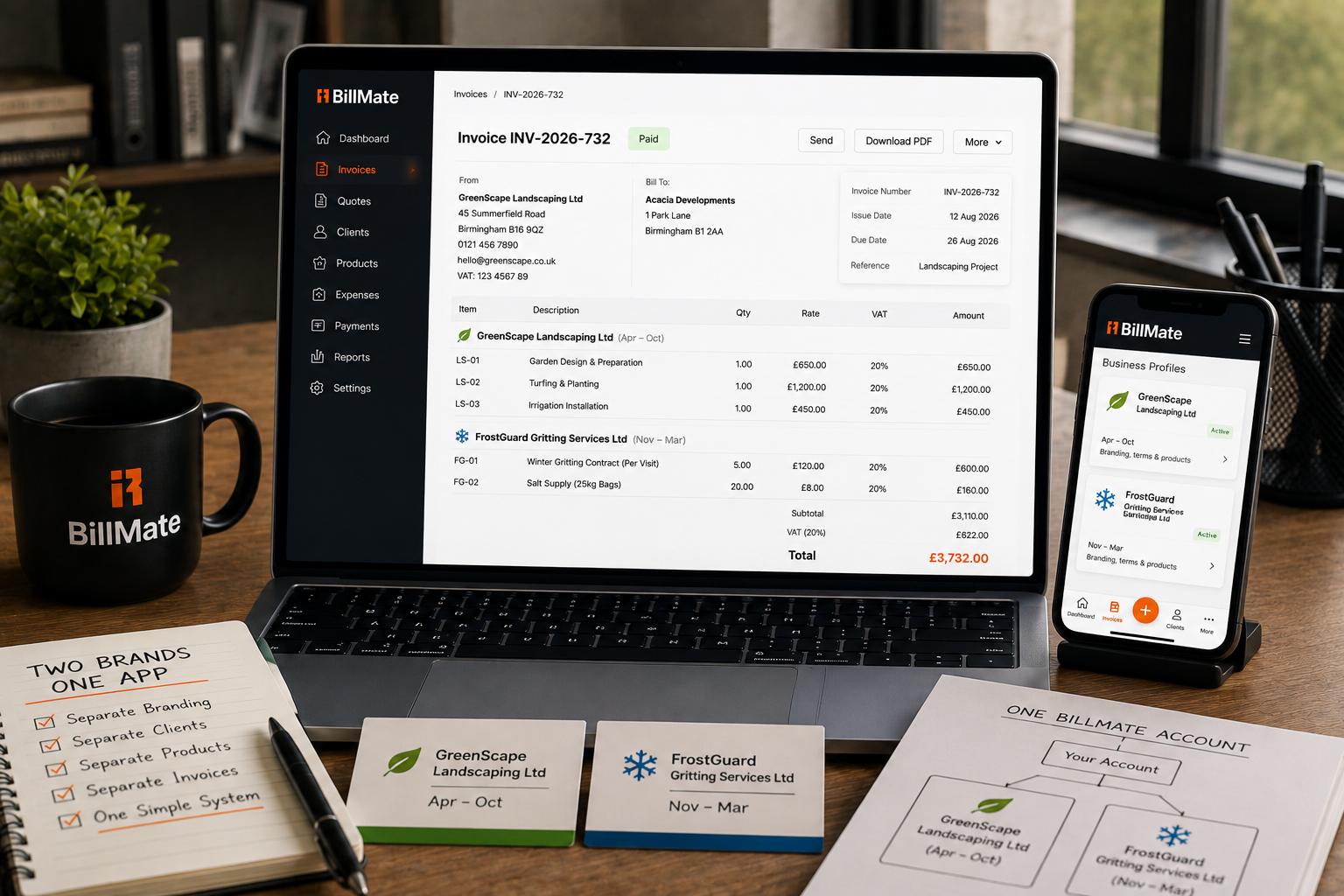
Groups that run separate trading arms can keep them cleanly apart with multi-business support, each with its own terms, branding and client list under one subscription.
The Results
The group's measure of success was fewer arguments and steadier cash:
- Billing disputes dropped sharply thanks to itemised, on-the-day invoices
- Cash flow stabilised because invoices go out on completion, not weeks later
- Site and office stay aligned through real-time record sync
- Leadership gained a live view of unpaid invoices across every site
- HMRC-aligned summaries turned audit prep into a hand-over, not a scramble
"Site and office finally look at the same numbers. Disputes fell away once customers could see exactly what they were paying for, itemised, on the day the work finished."
Commercial Manager, Bristol building group
Advice For Other Construction Firms
The group's takeaway was simple: bill from where the work happens, and make the customer's first sight of the detail the invoice itself, not a dispute weeks later. Put invoicing in the supervisor's hand on site, sync it straight to finance, and give leadership one live view of what is owed. The friction most builders accept as normal is really just a gap between two systems — close it and both disputes and late payments shrink.
Other trades have taken the same route: see how an electrical firm powered up its payment speeds, or how a maintenance team moved from handwritten receipts to digital trust.